## A River Place with Many Beginnings
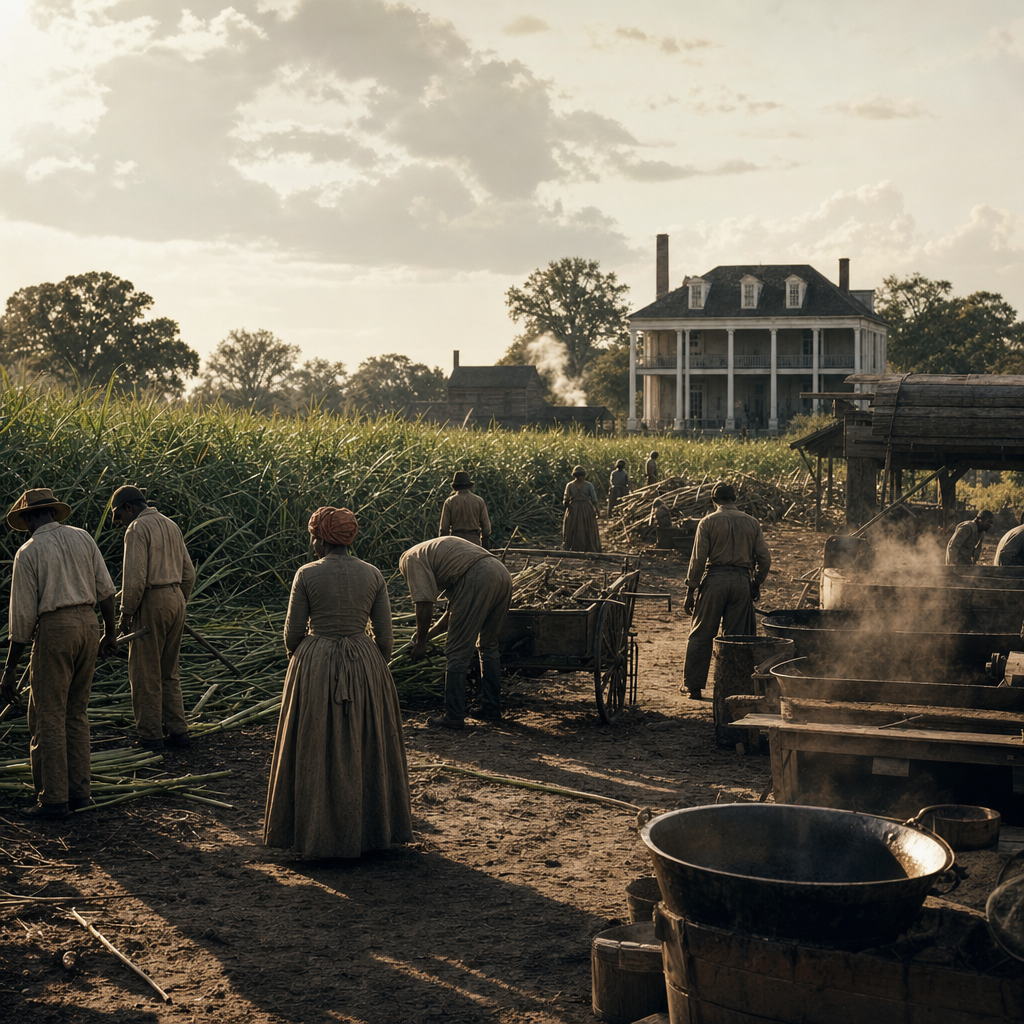
On the lower Brazos River, where Texas history gathers in layers rather than straight lines, Varner-Hogg Plantation State Historic Site preserves a story too complex to be contained by any single name. It is not only a house, not only a plantation, not only the retreat of a prominent political family, and not only a preserved historic property. It is a landscape shaped by colonization, slavery, oil, memory, philanthropy, and the long, unfinished work of interpretation.
Located in West Columbia, the site stands within a region that was central to early Anglo-American settlement in Texas. Its first recorded chapter reaches back to Stephen F. Austin’s colony, the ambitious colonization enterprise that brought settlers into Mexican Texas in the early 19th century. Among Austin’s early settlers was Martin Varner, who received land in the colony and established a homestead there in the 1820s. In that beginning, the place was part of a broader movement that transformed the lower Brazos country, drawing families, labor systems, ambitions, and conflicts into a river landscape already marked by deep histories.
Varner’s homestead did not yet carry the later name or associations that would define it in public memory. It was not yet Patton Place, not yet the Hogg family property, not yet a state historic site. It was a foothold in a changing Texas, part of the settlement pattern that accompanied Austin’s colony and the expansion of landholding along one of the region’s most important rivers. The Brazos was more than scenery. It was a corridor, a boundary, a resource, and a force that shaped where people built, planted, transported goods, and imagined prosperity.
The endurance of the site lies partly in how visibly it bears the marks of transition. Its story begins with colonization, but it does not stop there. The land moved from one owner to another; its use changed; its meaning changed. What began as Varner’s homestead in the 1820s became, in time, part of a plantation world tied to sugar production and to the forced labor of enslaved African Americans. Later still, it would be purchased by a former governor, transformed by oil wealth, restored by one of Texas’s most significant cultural patrons, and finally donated to the public.
That long sequence matters because it resists simplification. Historic places are often tempted into neat narratives: a founder, a grand house, a famous owner, a single era preserved in rooms and furnishings. Varner-Hogg Plantation State Historic Site does something more demanding. It asks visitors to understand continuity and rupture at the same time. The same ground that recalls Austin’s colony also holds evidence of plantation slavery. The same property associated with the Hogg family’s public legacy also points backward to the labor and suffering that sustained the earlier plantation economy. The same preserved house and grounds that evoke elite life also stand amid archaeological remains and interpretive efforts that bring less visible lives into focus.
To walk the site today is to encounter a Texas story built not in one dramatic moment, but over generations. The lower Brazos does not offer its history as a clean monument. It offers it as accumulation: land grant, homestead, plantation, emancipation, investment, oil field, restoration, donation, interpretation. Each layer remains present, even when one name rises to the surface.
The name Varner-Hogg itself signals that layered inheritance. Martin Varner anchors the early colonial period. James Stephen Hogg and his daughter Ima Hogg connect the place to Texas politics, philanthropy, and preservation. Between those names stands the Patton family and the plantation known as Patton Place, where the labor of enslaved people made sugar production possible. The site’s modern interpretation must hold all of these histories together, not as separate exhibits, but as parts of one complicated landscape.
In that sense, Varner-Hogg is not merely preserved. It is continually being re-read.
## Patton Place and the Plantation Landscape

In 1834, the property passed from the Varner chapter into another decisive phase when Columbus R. Patton acquired the site. Under the Patton family, the land became known as Patton Place, a sugar plantation in Brazoria County. That transformation placed the property within one of the most consequential and painful economic systems of antebellum Texas: plantation agriculture built on enslaved labor.
Before the Civil War, large plantations in Brazoria County depended on the forced labor of enslaved African Americans. Patton Place was part of that world. The production of sugar required intense labor, seasonal pressure, technical skill, and a system of coercion that extracted wealth from people who were denied freedom, wages, autonomy, and legal personhood. The surviving landscape at Varner-Hogg cannot be understood honestly without that reality at its center.
For many years, plantation sites across the South were often presented through the architecture and belongings of owners: fine rooms, prominent families, inherited objects, stories of political influence and social standing. Such narratives could make the plantation appear as a symbol of refinement while obscuring the violence that made it function. Varner-Hogg Plantation State Historic Site now approaches the property differently. Its surviving landscape and archaeological remains are interpreted as part of the history of slavery and plantation labor, not simply as the backdrop to a grand-house story.
That shift is essential. A plantation was never only a house. It was an economy, a work regime, a hierarchy, and a landscape of power. Fields, outbuildings, paths, work areas, domestic spaces, and buried traces all help tell the story. The archaeological remains at the site matter precisely because so much of the lives of enslaved people was not recorded with the same care that preserved the names and transactions of landowners. Documents may identify owners, dates, purchases, and estates; the ground may hold evidence of those whose labor made the estate profitable.
The name Patton Place carries with it the ambitions of a planter family, but it also carries the history of those who were forced to sustain those ambitions. The enslaved African Americans who labored there were not incidental to the plantation’s story; they were central to it. Their work shaped the land, supported the economy, and made possible the wealth and status associated with plantation ownership. Any interpretation that leaves them at the margins fails to explain what the place actually was.
The lower Brazos region was deeply tied to plantation development before the Civil War, and Brazoria County became one of the prominent centers of that system in Texas. Sugar cultivation was demanding, and its profitability depended on a brutal organization of labor. At Patton Place, as on other plantations in the county, enslaved workers lived under conditions defined by compulsion. Their lives were constrained by the legal and social structures of slavery, yet their presence remains embedded in the site itself—in its landscape, its archaeology, and the historical questions that guide interpretation today.
The Civil War and emancipation brought a profound break. Enslavement ended, but freedom arrived amid upheaval, uncertainty, and struggle. The postwar years transformed the plantation world, though not in ways that erased its legacy. After emancipation, the property changed hands several times, passing through new chapters as Texas and the South confronted the aftermath of slavery and war. Ownership shifted; economic arrangements changed; the old plantation order was altered, though its physical traces and historical consequences remained.
The history of Patton Place therefore does not conclude neatly with emancipation. The end of slavery was a turning point of enormous significance, but the land continued to carry the imprint of what had happened there. The former plantation moved into the postwar era as a property with a past that could not be separated from its future uses. Later owners would bring different ambitions to the place, but they inherited a landscape already shaped by colonization and forced labor.
Today, the interpretation of Varner-Hogg insists on that fuller view. The site includes the historic plantation house, grounds, outbuildings, and exhibits, but these elements are not treated as isolated relics. They are connected to the people who built, maintained, worked, inhabited, and transformed the place over time. The result is a more honest historical experience—one that acknowledges prominence and power while also confronting exploitation and loss.
To stand before the preserved features of the site is to face the tension at the heart of plantation history. Beauty and brutality can occupy the same landscape. A house can be architecturally significant and morally complicated. A cultivated field can speak of agricultural enterprise and human bondage at once. Varner-Hogg’s importance lies in its willingness to hold those truths together.
## The Hogg Family, Public Power, and Oil Wealth
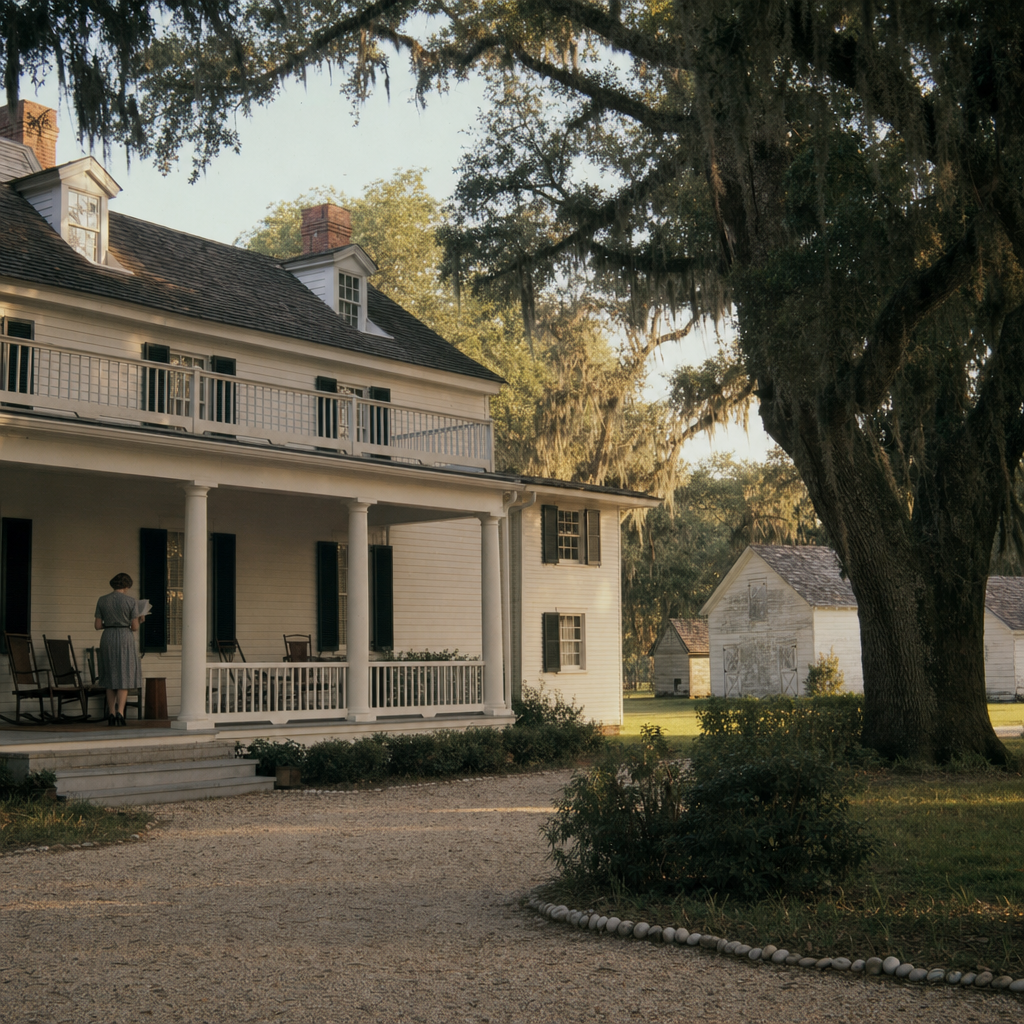
At the beginning of the 20th century, the property entered another major chapter when James Stephen Hogg purchased it in 1901. Hogg was no ordinary buyer. He had served as governor of Texas from 1891 to 1895 and was known for challenging railroad and corporate power. His public career had made him one of the defining political figures of his era, associated with efforts to confront concentrated economic influence at a time when railroads and corporations exerted enormous power over Texas life.
When Hogg acquired the former plantation, he bought it as an investment and as a family retreat. The purchase connected the site to a new kind of prominence. No longer simply remembered as Varner’s homestead or Patton Place, the property became tied to a family whose name would become deeply associated with Texas politics, philanthropy, art, education, mental health reform, and preservation.
Yet James Stephen Hogg’s time with the property was brief. He died in 1906, before the event that would dramatically alter the family’s financial future: the discovery of oil in the West Columbia area in 1918. That later discovery brought new wealth to the Hogg family through mineral interests connected to the property and region. The oil wealth did not belong to the plantation era, but it became part of the site’s layered story, linking the land not only to agriculture and slavery, but also to the energy economy that shaped modern Texas.
The contrast is striking. In one century, the property had been part of a plantation economy dependent on enslaved labor. In another, it became associated with oil-derived wealth and philanthropic possibility. The same landscape moved through radically different systems of value: colonial landholding, sugar production, postwar transfer, investment, mineral wealth, and public preservation. Each stage reflects a broader Texas transformation.
James Hogg’s purchase also complicates the way the site is remembered. His reputation as a governor who challenged railroad and corporate power gives the property a political dimension distinct from its plantation past. He was part of the reform-minded currents of late 19th-century Texas politics, and his name carried public meaning long before the oil wealth of 1918. But his acquisition of the former plantation did not erase what had come before. Instead, it added another layer to a place already crowded with history.
After his death, the property’s significance within the Hogg family continued to grow. The West Columbia oil field’s discovery in 1918 transformed mineral interests into a major source of funding for later philanthropic work. That connection between land and philanthropy is central to understanding the site’s 20th-century importance. Wealth generated from mineral interests helped support causes that would become closely associated with James Hogg’s daughter, Ima Hogg.
Oil in Texas often appears in history as a force of sudden change—a substance that could remake fortunes, towns, institutions, and ambitions. At Varner-Hogg, it did not simply produce private wealth; it helped make possible a broader legacy of cultural and civic support. The land’s economic meaning changed again. Where sugar had once tied the property to plantation slavery, mineral wealth later helped underwrite philanthropy and preservation.
This does not make the earlier history disappear, nor does it redeem it in any simple way. Rather, it reveals the uneasy continuity of place. Historic landscapes rarely belong to one moral category. They accumulate human choices and systems across time. Varner-Hogg is a property where a story of oppression sits beside a story of public service; where a former plantation became a family retreat; where oil money later supported cultural and social causes; where preservation eventually opened the site to public interpretation.
James Stephen Hogg’s role in this chronology is pivotal but transitional. He brought the property into the Hogg family, but he did not live to see the oil discovery that would reshape the family’s resources. He purchased the site as an investment and retreat; later generations would make it something else. In that sense, his acquisition was a hinge between eras. The plantation past remained beneath the surface, while the future of oil wealth and preservation had not yet fully emerged.
The property’s association with the Hogg name would ultimately become inseparable from Ima Hogg, whose stewardship gave the site its modern preservation identity. But before her restoration work and donation to the state, there was this moment of transfer in 1901: a former governor acquiring a former plantation in a region soon to be transformed by oil. The scene contains much of Texas history in miniature—land, power, reform, family, wealth, and the persistent presence of the past.
## Ima Hogg and the Work of Preservation
The person most closely associated with Varner-Hogg Plantation State Historic Site in the 20th century is Ima Hogg, daughter of James Stephen Hogg. Her life’s work extended far beyond the property. She became one of Texas’s major patrons of the arts, education, mental health reform, and historic preservation. Through her, the former plantation entered a new phase—not as a private investment or retreat alone, but as a place where Texas history could be studied, preserved, furnished, and interpreted.
Ima Hogg restored and furnished the old plantation house, approaching the property as a historic resource rather than merely a family possession. Her work reflected a wider preservation impulse: the belief that buildings, landscapes, and objects could help connect Texans to the complexity of their past. In restoring the house, she helped ensure that the site would survive as more than a name in records or a memory tied to family history.
Yet preservation at a place like Varner-Hogg carries special responsibility. To preserve a plantation house is not simply to admire architecture or recover domestic elegance. It is to decide how a painful and complex history will be presented to the public. Ima Hogg treated the property as a place where Texas history could be studied and interpreted, and that purpose remains central to the site today.
In 1958, she donated the site to the State of Texas. That act moved the property from private stewardship into public trust. It ensured that Varner-Hogg would not be remembered only through family inheritance, nor left to the erosion of time and changing ownership. The donation gave the site a civic role: to educate, to preserve, and to invite public engagement with the many histories held there.
Today, Varner-Hogg Plantation State Historic Site is operated by the Texas Historical Commission. The site includes the historic plantation house, grounds, outbuildings, and interpretive exhibits. Together, these elements tell a story that reaches across more than a century of dramatic change, from Stephen F. Austin’s colony and Martin Varner’s 1820s homestead to Columbus R. Patton’s sugar plantation, from the forced labor of enslaved African Americans to emancipation and postwar upheaval, from James Stephen Hogg’s 1901 purchase to the West Columbia oil discovery of 1918, and from Ima Hogg’s restoration work to the site’s public life today.
Its interpretation now addresses both the prominent Hogg family and the enslaved people whose labor sustained the earlier plantation economy. That dual focus is not a matter of balance for balance’s sake; it is a matter of historical accuracy. The Hogg family’s influence is real and significant. James Stephen Hogg’s governorship, Ima Hogg’s philanthropy, and the family’s connection to oil wealth all belong to the site’s history. But so do the lives of enslaved African Americans at Patton Place. Their labor made the plantation economy possible, and their stories are essential to understanding the meaning of the landscape.
The modern site therefore asks visitors to move beyond the old habit of seeing historic places only through the lives of the powerful. It invites a wider gaze. The plantation house matters, but so do the grounds. The outbuildings matter. The archaeological remains matter. The silences matter. The preserved property is not merely a collection of structures; it is a document written across land, ownership, labor, and memory.
Varner-Hogg’s power as a historic site lies in its refusal to belong to only one era. It is a place of beginnings and reinventions, of wealth and exploitation, of private ambition and public preservation. It embodies the contradictions of Texas history: colonization along the Brazos, plantation slavery before the Civil War, the disruptions of emancipation, the rise of oil wealth, and the 20th-century movement to save and interpret historic places.
The site’s survival is itself remarkable. Many landscapes of this kind have been altered beyond recognition, absorbed by development, or remembered only through selective stories. Varner-Hogg remains legible because it was preserved, but its preservation is meaningful only because interpretation continues to deepen. The task is not simply to keep buildings standing. It is to make the past visible in all its difficulty.
In West Columbia, on the lower Brazos River, the property endures as a layered Texas landmark. It began with Martin Varner and Austin’s colony. It became Patton Place, a sugar plantation dependent on enslaved labor. It passed through emancipation and postwar change. It was purchased by James Stephen Hogg, touched by the wealth of the West Columbia oil field, restored by Ima Hogg, and donated to the state in 1958. Today, under the care of the Texas Historical Commission, it stands as a place where history is not flattened into nostalgia, but opened—carefully, deliberately, and publicly—to the full weight of what happened there.