# The First Food Bank Began With a Mother’s Plain Good Sense
A bank where the deposits were bread, cans, and vegetables sounds like a joke someone might make beside a grocery bin. But in Phoenix, that simple idea grew large enough to feed people far beyond one neighborhood.
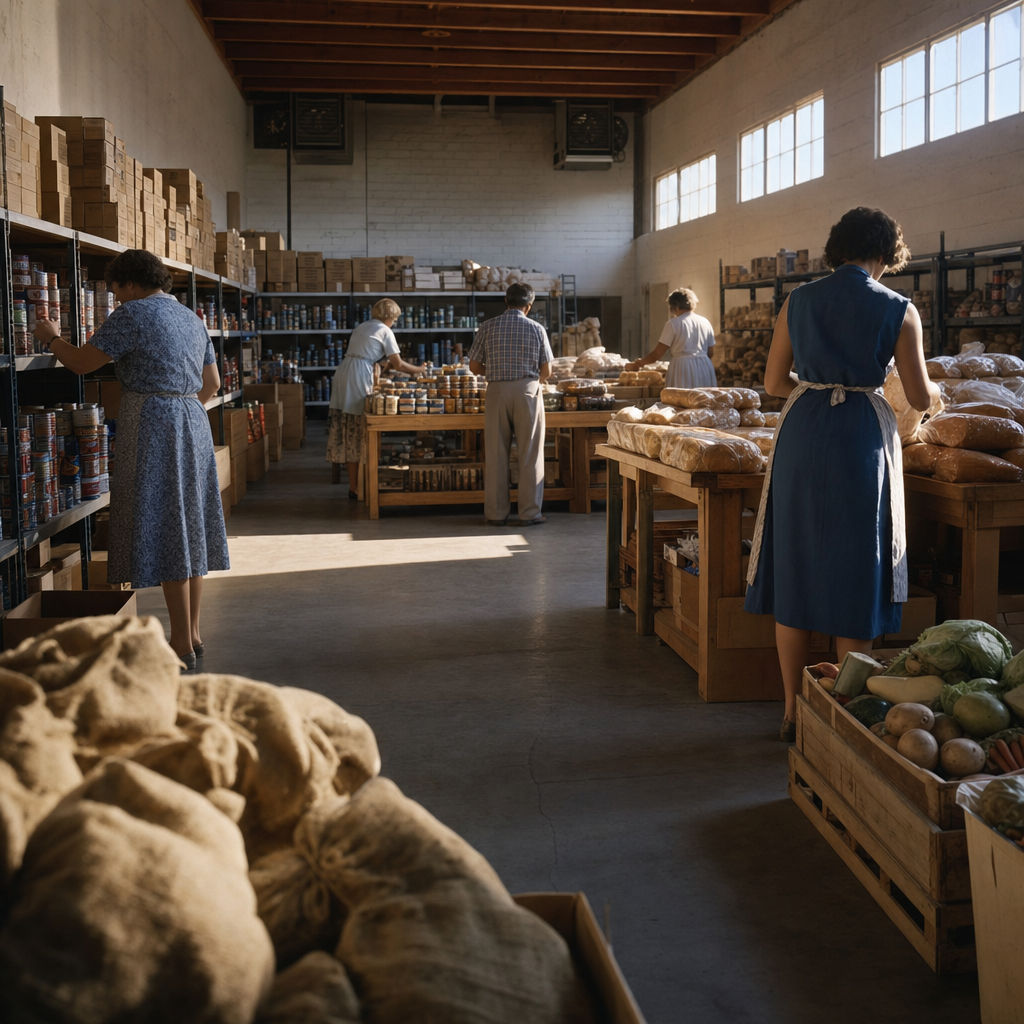
John van Hengel was volunteering with St. Mary’s in Phoenix, helping people who needed food, when he heard the idea from a mother who knew hunger up close. She told him how she fed her children with perfectly edible groceries that stores had thrown away.
She wasn’t giving a speech. She was explaining what she had already learned: good food was being wasted while families went hungry.
Her suggestion had the kind of common sense that can make a person laugh because it is so obvious once someone says it out loud. If banks could hold money until people needed it, why couldn’t there be a bank for food?
You can imagine the pause after that. Not a grand, trumpet-blaring pause. More like the quiet click of a cupboard latch closing. The kind of moment when an ordinary sentence suddenly has weight.
Van Hengel listened.
That may be the most important part of the story. He didn’t brush off the mother’s idea because it came from someone trying to make dinner out of what others had discarded. He didn’t treat it as a clever remark and move on. He took it seriously.
Working with St. Mary’s, he began putting the idea into practice. Local stores had surplus food. Charities and hungry families needed food. The missing piece was a place in between — somewhere to collect it, store it, and move it along.
He called it St. Mary’s Food Bank.
The name was beautifully plain. No fuss. No polished slogan. Just a bank, only the currency was groceries. Make deposits. Make withdrawals. Keep the good food moving.
There is something almost cheerful about the practicality of it. A can of soup doesn’t need a committee to know where it belongs. A loaf of bread doesn’t care about paperwork. It just needs to get from the place where it is extra to the table where it is needed.
That was the turn: what had looked like waste became a resource. What had been hidden in the routines of grocery stores became visible. What one mother had figured out for her own children became a model for helping many others.
St. Mary’s Food Bank became widely recognized as the world’s first food bank. From that start in Phoenix, van Hengel later helped spread the model nationally through Second Harvest, now Feeding America. The idea traveled because it was simple enough to explain in one sentence and useful enough to keep.
St. Mary’s Food Bank Alliance still operates in Arizona, serving communities across much of the state. The heart of the story is still humble: a man listened carefully, and a mother’s practical wisdom helped change how food could be shared.
It began with groceries waiting for the right hands.