# Mary Shields and the Beautiful Business of Finishing Last
At the end of the Iditarod, a lantern waits in Nome—not for the fastest musher, but for the last one still coming. It stays lit like a small, stubborn wink in the cold.
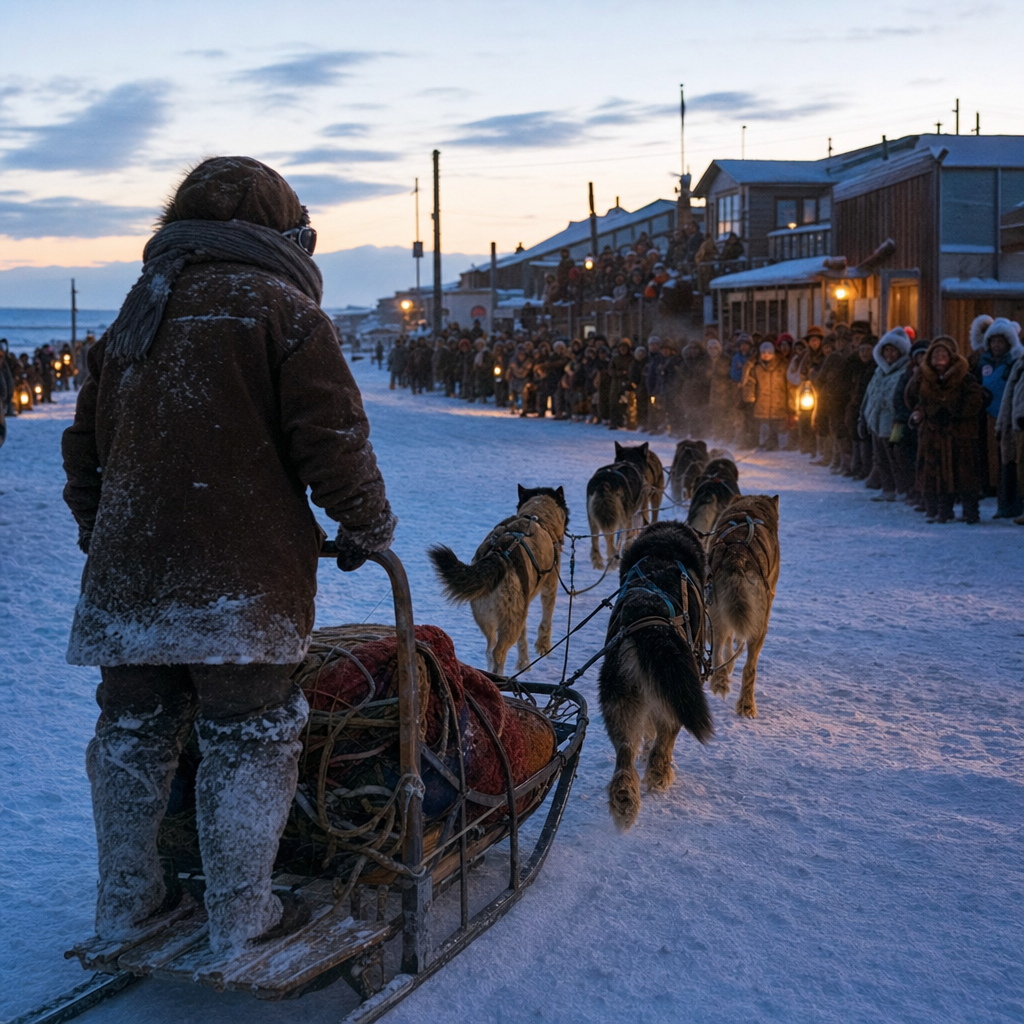
Mary Shields was on that trail in 1974, when the Iditarod Trail Sled Dog Race was only in its second year. The race ran roughly 1,000 miles from the Anchorage area to Nome, and Shields wanted what every musher out there wanted: to bring her dogs, her sled, and herself all the way to the finish.
She did not arrive first. She did not arrive close to first. She came into Nome in 23rd place, the final musher to make it to the end.
That is where the story gets lovely.
In most races, last place slips out the side door. The cameras are packed up. The excitement has moved on. Someone is sweeping confetti, if there was ever confetti to begin with. The winner’s name gets polished and repeated, while the last finisher becomes a footnote.
But the Iditarod has never been most races.
There, the Red Lantern is part joke, part honor, and part deeply Alaskan nod to the kind of person who keeps going when nobody would blame them for stopping. The lantern stays lit until the final team is home. Not until the champion arrives. Not until the first cheers have faded. Until the last musher crosses into Nome.
So when Mary Shields reached the finish in last place, she wasn’t met by silence. She had earned the Red Lantern, the race’s wonderfully wry salute to endurance. It’s hard not to smile at the humor of it: congratulations, you are officially last, and we are delighted about it.
A lantern is not a trophy shaped like victory. It’s a useful thing. It says, “There’s still someone out there.” It says, “Keep the light on.” It says, in its own quiet way, “We’re not done until everyone is in.”
For Shields, that light meant more than a ranking. It meant she had finished. She had become the first woman ever to complete the Iditarod.
Not the first woman to try. Not the first woman to stand near the idea of it. The first woman to make it all the way to Nome in that race.
Imagine the scene without dressing it up too much: a musher at the back of the pack, dogs that had done their part mile after mile, a sled that had made the long pull, and a finish line still waiting. Nome got to cheer one more time. The end of the race had a little grin built into it.
That is the turn in Mary Shields’ story. Last place did not shrink her accomplishment. It framed it.
Her 23rd-place finish said something wonderfully plain: she did not quit. The dogs got there. The sled got there. Mary Shields got there. In this case, history was not made by outrunning everyone else. It was made by continuing until the whole team came home together.
Afterward, the Red Lantern attached itself to her name in the best possible way. It marked a finish that mattered, especially because she was the final musher on the trail. It also gave the young Iditarod one of its most human images: the race holding space for the person who needed the longest to arrive.
Mary Shields came in last, and Nome got one more reason to celebrate.