# The Week Guam Felt Like the Center of Soccer
The odd little magic of soccer is that a ball can roll across a field in Dededo and make a country of more than a billion people suddenly feel very close. For Guam, the scoreboard didn’t need poetry. It had numbers, and the numbers were grinning.
Jason Cunliffe had worn Guam’s colors for years by then. A Guam-born forward and longtime captain of the men’s national team, he had stayed with the Matao through seasons when World Cup qualifying could feel like packing a suitcase just to come home with another hard lesson. What he wanted was simple and stubborn: to see Guam compete not as a footnote, but as a team that belonged on the same page.
For a long time, that page was not kind.
World Cup qualifying had a way of making the island feel its size. Guam was often described by outsiders in terms of distance — far from the U.S. mainland, far from the bigger soccer nations, far from almost everywhere. And yet the players kept showing up. Cunliffe kept showing up. There’s a special kind of faith in that, the kind that looks a lot like practice, travel, sweat, and pulling on the same shirt again.
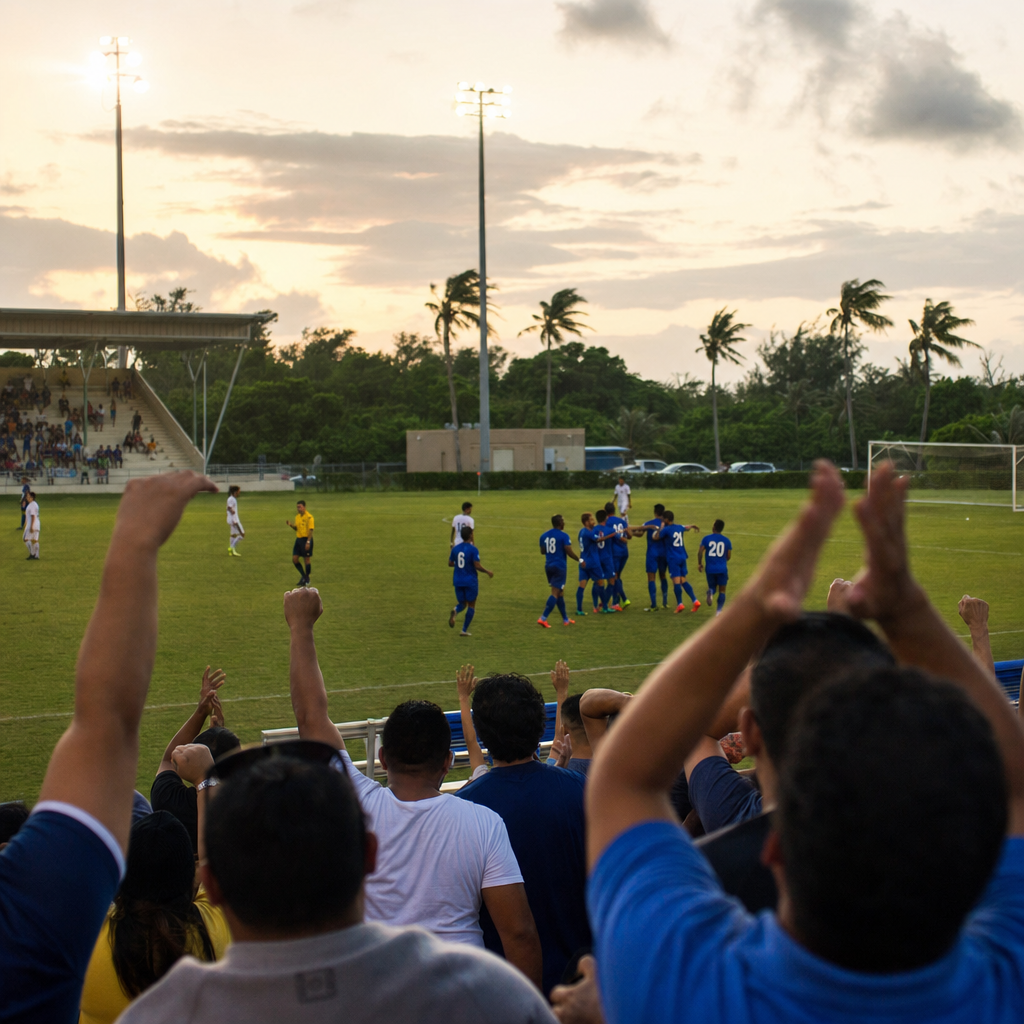
Then came that June week at the Guam Football Association National Training Center in Dededo.
First, Guam beat Turkmenistan 1-0.
That sentence is small enough to fit in a box score, but for the Matao it carried years inside it. It was Guam’s first victory in a FIFA World Cup qualifier, the kind of first that makes people check the table twice, then maybe a third time, just for the pleasure of seeing it still there.
Cunliffe didn’t have to be the goal scorer for the moment to belong to him. Captains often live in the less flashy parts of a match — the glance that settles a teammate, the run that makes space, the calm when everyone else’s nerves are trying to climb out of their shirts. After years of lean days, he was there for the turn.
And then Guam did something even better than win once.
Five days later, the Matao faced India. India had more than a billion people. Guam had roughly 160,000. On paper, it was the sort of comparison that feels almost rude, like setting a coconut next to a cargo ship and asking which one looks bigger.
But soccer doesn’t play on paper.
Brandon McDonald scored. Travis Nicklaw scored. Guam led 2-0, and suddenly the home field in Dededo was not some distant dot on someone else’s map. It was the place where the story was happening.
India’s Sunil Chhetri scored late in stoppage time, the kind of goal that can make a finish feel nervy even when there are only scraps of time left. But Guam held on. The whistle came. The scoreboard said Guam 2, India 1.
The arithmetic was the fun part, and everyone could do it. Little Guam had beaten India. Little Guam had six points in its qualifying group. Guam’s name sat in World Cup tables alongside Iran, Oman, India, and Turkmenistan, looking not out of place but right at home, as if it had pulled up a chair and politely refused to leave.
For Cunliffe, the joy was not only in the two wins. It was in the steadiness that led there — all those years of wearing the shirt when the rewards were thin, all those trips when qualifying felt less like a tournament and more like a lesson in endurance. Now he could stand with teammates and local supporters while Guam’s soccer story opened in front of them, right there at home.
And for the kids watching, the field in Dededo had become something larger than grass and lines. The world had come to Guam, and Guam had held its own.
That week, the island didn’t feel far from anywhere.