# The Boy Who Saw the Shoes
The shoes were what Nicholas Lowinger couldn’t stop seeing: sneakers with tired soles, pairs pinching small feet, shoes that looked as if they had already lived someone else’s whole childhood.
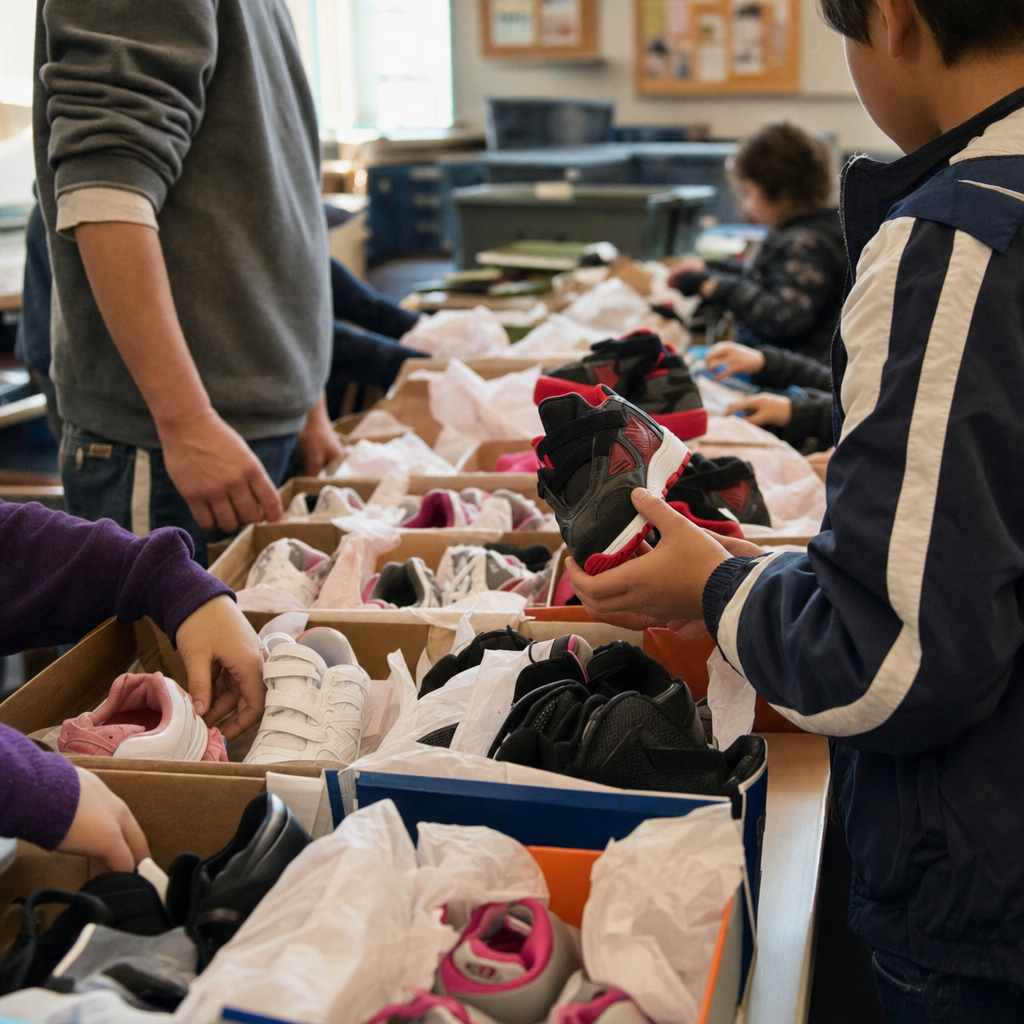
Nicholas was a little boy in Cranston, Rhode Island, when visits to homeless shelters left him with that stubborn detail. He wasn’t thinking in speeches or statistics. He was thinking about kids who needed to run, play, and walk into school in shoes that fit.
Clothes could be passed along. A shirt could be a little big and still work. A jacket could wait for a growth spurt. But shoes were different. Shoes had to match the feet inside them, and when they didn’t, every step announced it.
A child can understand this instantly. New sneakers aren’t just rubber and laces. They’re the little burst of confidence that comes from opening a box and finding something meant for you. They’re the feeling that maybe you can run faster, jump higher, or at least make it through the school hallway without worrying that everyone is looking down.
There’s a bit of kid logic in it, too. Of course kids care about sneakers. Not in a fancy way. In the practical, “these make me feel ready” way. A new pair can make a child feel half an inch taller and suspiciously faster by recess.
When Nicholas was 12, he turned that thought into action. He started Gotta Have Sole, a Rhode Island-based nonprofit focused on giving new footwear to children living in shelters and other vulnerable circumstances.
The word “new” mattered.
This wasn’t only about covering toes, though it did that. It was about the joy of receiving a pair that had not been stretched by another child’s feet, scuffed by another child’s games, or chosen because it was simply what happened to be available. It was about the quiet message tucked inside a shoebox: These are yours.
For a child in a shelter, so much may already feel temporary or borrowed. A bed might be unfamiliar. Routines may shift. Belongings may be few. But a pair of shoes made for your own feet is personal in the simplest way: left shoe, right shoe, your laces, your size, your steps.
Nicholas seemed to understand that early. He saw that dignity doesn’t always arrive with a grand announcement. Sometimes it comes wrapped in tissue paper, smelling faintly of new rubber, waiting for a child to tug it on and stand up a little straighter.
What began with one boy’s attention grew beyond a middle-school project. CNN named Nicholas Lowinger a 2013 CNN Hero, and reported that by then Gotta Have Sole had provided more than 10,000 pairs of shoes to children in 21 states.
He was still a teenager, but his idea had already traveled a long way from that first observation in the shelters. One child noticed what other people might have walked past. Then he found a way to let other children walk forward more comfortably.
The result was practical, kind, and ordinary: new shoes for kids who needed them.
Sometimes hope comes in a shoebox.