# The Farm Boy Who Got Winter to Sit Still
The room wasn’t heated, which was probably the point: a snow crystal is not a patient guest. One warm breath, one slow hand, and the tiny star would be gone.
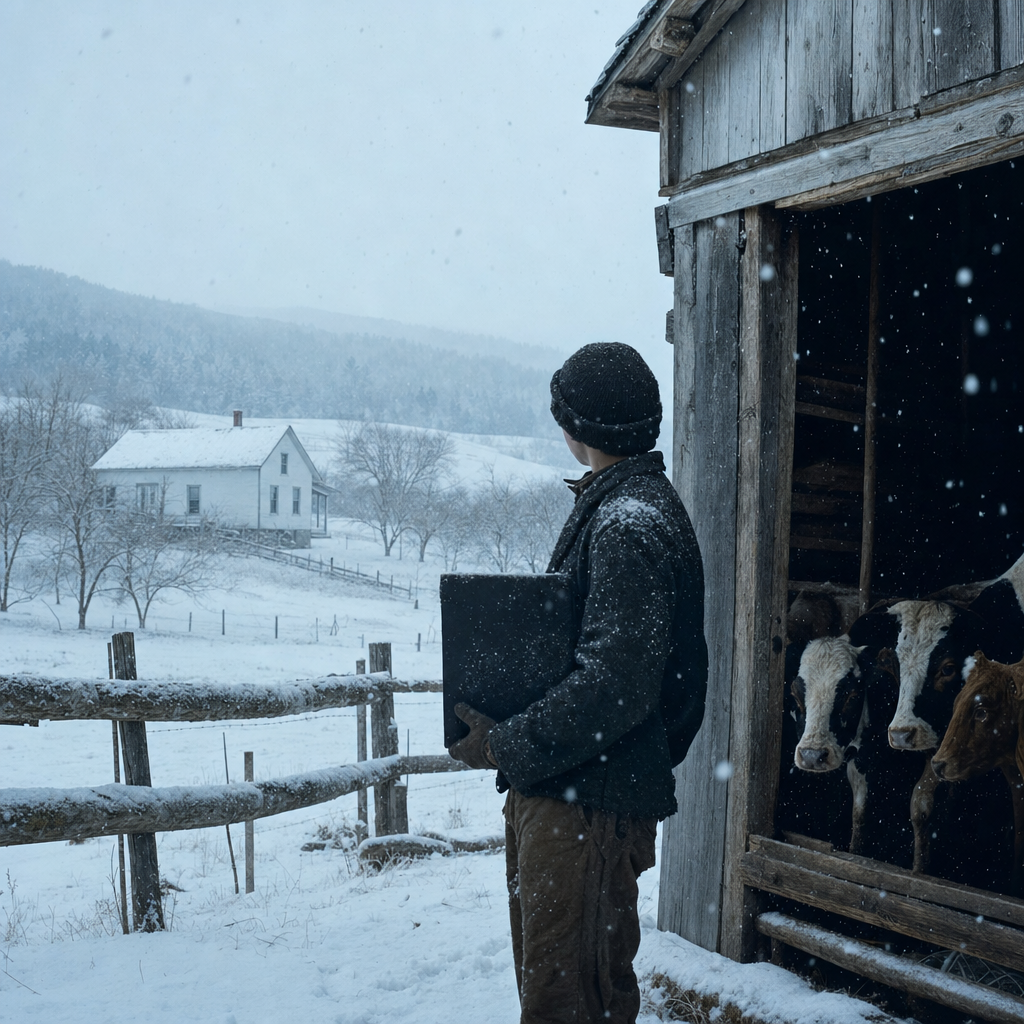
Wilson Alwyn Bentley was 19, a farm boy in Jericho, Vermont, with his attention fixed on the sky. Winter meant chores on a dairy farm, but Bentley wanted something most people missed entirely: to see one snow crystal clearly, and to keep its image before it melted. His mother, a former teacher, encouraged his fascination with weather, and his family helped him get the microscope and camera equipment he needed.
It must have looked like a strange use of time.
There was Bentley, in farm country, spending two snowy seasons trying to photograph something that landed by the millions. Snow came down on roofs, fields, fences, sleeves. It piled up where it was useful and where it was not. It got shoveled, tramped through, shaken off boots, and probably muttered about by anyone with work to do.
Bentley looked closer.
He was trying to make a portrait of a single snow crystal through a microscope. Not a drift. Not a storm. One small, delicate shape, here for only a few moments. The challenge was almost comically unfair: the subject arrived cold, disappeared quickly, and did not care in the least about the young man adjusting his equipment.
For two winters, he kept at it.
His parents’ support matters. On a dairy farm, a microscope-and-camera pursuit of snowflakes could easily have been dismissed as nonsense. There were practical things to buy and practical things to do. But his family made space for wonder, even when wonder came with cold fingers and no obvious paycheck.
Then, on a January day in 1885, in that unheated room in Jericho, Bentley finally got winter to hold still.
He made what is widely credited as the first successful photograph of a snowflake taken through a microscope.
No trumpet sounded. No parade marched past the dairy farm. The snow crystal did what snow crystals do: it existed briefly, beautifully, and then vanished. But this time, Bentley had caught it. The tiny structure, so easy to lose in a mitten or on a windowsill, had been seen and saved.
You can almost imagine the neighbors hearing about it.
“A photograph of a snowflake?”
It was odd enough that they reportedly gave him a nickname: “Snowflake” Bentley. There’s teasing in it, of course, the kind small communities know how to hand out with a grin. But Bentley seems to have worn it with good humor. If you’re going to be known for something, being the person who noticed snowflakes were worth noticing is not the worst fate.
That first success did not end the fascination. It opened the door.
Bentley went on to photograph more than 5,000 snow crystals. More than 5,000 times, he gave his full attention to something most people only saw as weather. He sold prints to schools and colleges for a few cents apiece, sending those intricate little designs into classrooms and collections where others could lean in and see what he had seen.
Later, he helped publish the 1931 book “Snow Crystals,” which included 2,453 images. Page after page, the same quiet surprise appeared in new forms: no need for glitter, no need for decoration, just nature making tiny architecture in the cold.
What changed was not the snow. Snow had always been falling.
Bentley showed people how much there was to see in it. His patient little victory in Jericho turned an ordinary farm chore season into a lifelong act of attention: something falling by the millions could still deserve one person’s care.
Winter had found its portraitist.