# The Canoes Meant to Get People Wet
On Saipan, the most surprising thing about a traditional sailing canoe may be that it isn’t meant to sit still. It’s meant to meet the water, take a splash, and make somebody grin.
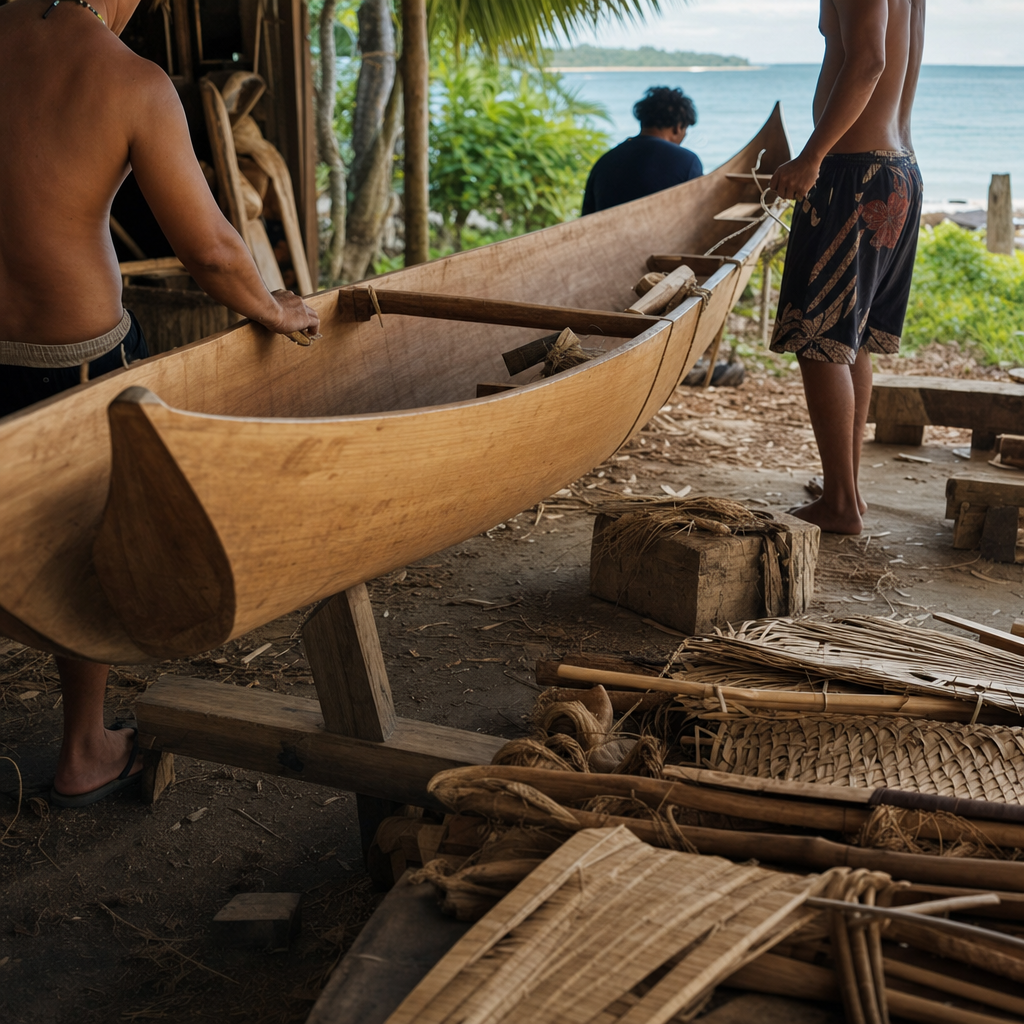
Emma Perez was looking at an old island skill that had almost slipped out of everyday life. Traditional Chamorro and Carolinian sailing canoes had largely disappeared from daily waters in the Marianas, and she wanted more than admiration for them. She wanted them back in use.
With her husband, Chamorro master canoe builder Peter “Pete” Perez, Emma co-founded 500 Sails, a nonprofit with a public goal that sounds almost like a dare: return 500 traditional Chamorro and Carolinian sailing canoes to Mariana waters by 2030.
Five hundred sails. Not five. Not fifty. Five hundred.
There’s gentle humor tucked into that number, because at first it sounds wildly oversized, like someone went canoe shopping with a very optimistic calculator. But that is the point. Build one beautiful canoe, and people may gather around it, lower their voices, and admire it from a safe distance. Build many, and the canoe stops being rare. It becomes part of the shoreline again. It becomes something a child can point to and ask, “Can I have a turn?”
That everyday feeling is the heart of the work at Guma’ Sakman, the canoe house in Susupe. The canoes there are not treated like museum pieces, polished and kept behind a rope. They are made for hands, feet, balance, salt water, and the occasional splash that lands exactly where you were hoping it wouldn’t.
At Guma’ Sakman, people learn to swim. They help build. They climb aboard. They get wet.
A canoe culture doesn’t come back only because someone says it matters. It comes back because people are invited close enough to touch it: close enough to learn the feel of the materials, the shape of the hull, the patience of the work, and then the bright little shock of the water when the canoe moves under them.
Emma’s idea wasn’t to place the past on a pedestal. It was to make room for it in ordinary life again.
So the canoe house becomes more than a workspace. It is a place where a skill can move from memory into muscle. People don’t just hear that Chamorro and Carolinian sailing canoes once belonged in Mariana waters; they get a chance to understand why. They can see the canoes taking shape. They can step aboard. They can feel that small moment when balance matters and the sea has a say.
For a child on Saipan, that changes the whole meaning of the canoe. It’s no longer only something to respect from afar, though it is worthy of respect. It is also something alive enough to invite a question.
“Can I have a turn?”
That question is the ripple Emma Perez and 500 Sails are working toward. If enough canoes return to the water, sailing one can begin to feel normal again, not unusual or out of reach. A traditional skill that had faded from daily life can become visible, practical, and shared.
And somewhere in that splash is a very happy comeback.