# The School Program That Made Mothers the Guests of Honor
Before Mother’s Day meant cards on a rack or flowers wrapped in crackly paper, it could look as simple as children standing in a schoolroom, trying very hard not to giggle while honoring the women who had likely scrubbed their faces that very morning.
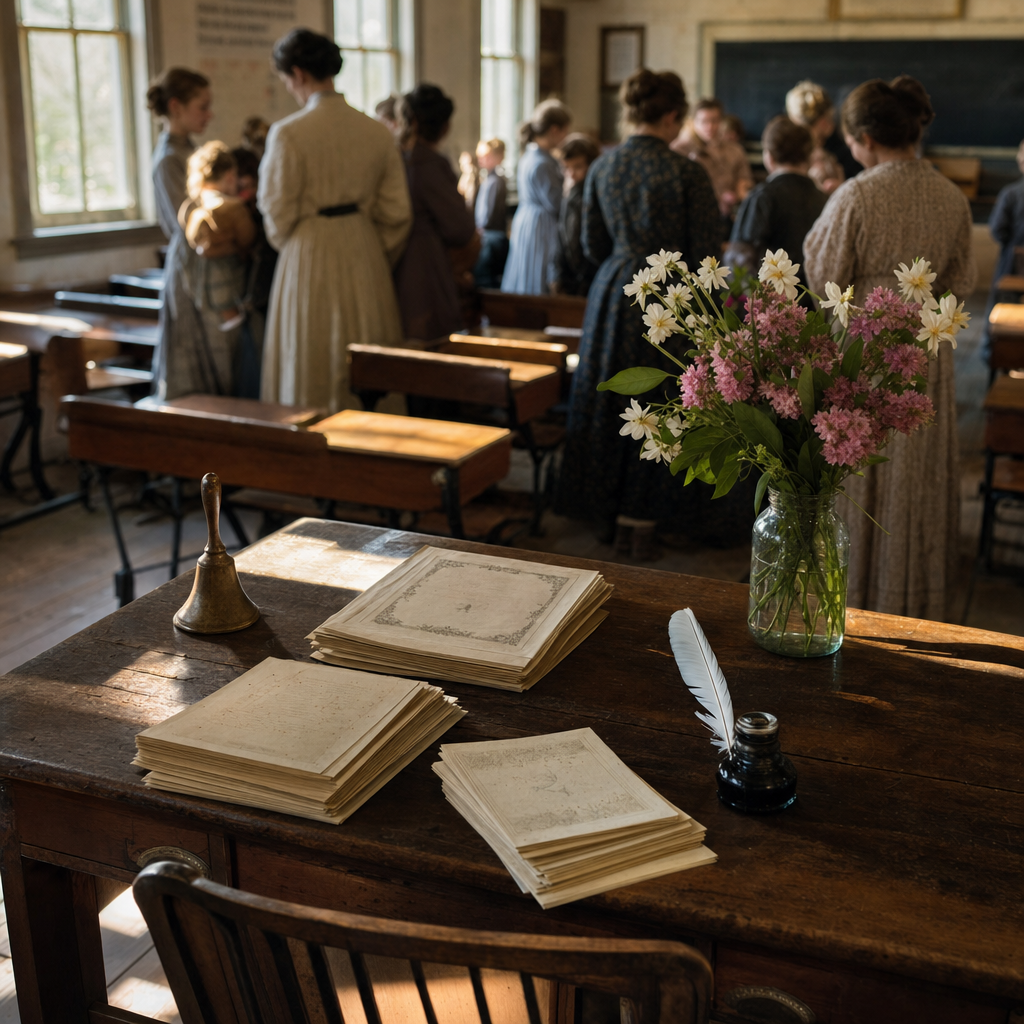
Mary Towles Sasseen was a schoolteacher in Henderson, Kentucky, the town where she had been born in 1860. At Center Street School, she wanted her pupils to learn more than spelling and recitation. She believed a classroom could teach gratitude, too.
In April 1887, Sasseen led what is widely cited as one of the earliest organized Mother’s Day celebrations in the United States.
It wasn’t grand in the way public holidays can become grand. There was no parade rolling down the street, no official proclamation taking over the day. Just a school program, carefully arranged, with children doing what schoolchildren have always done when adults are watching: standing up straight, remembering their lines, singing the songs, and sneaking glances to see if Mama was smiling.
The mothers were the guests of honor.
That was the lovely turn of it. In many homes, mothers were the ones packing lunches, mending cuffs, keeping track of manners, meals, collars, and whether a child had left the house looking presentable. At Sasseen’s program, the usual order shifted. The mothers sat and listened. The children performed for them. Everyday affection, the kind often left unsaid between chores and scoldings and supper, was given a place on the schedule.
The message was wonderfully plain: thank you, Mama.
Sasseen used the tools she had. Pupils. Paper programs. Songs. Poems. Readings. A roomful of proud mothers. Nothing flashy, nothing expensive, nothing that required anyone to be famous first. Just a teacher seeing that children sometimes need a little help saying what they feel, especially to the people who do the most for them.
And there must have been something sweetly funny in the arrangement, too. Children can be solemn for only so long. One can imagine the careful faces, the shuffling feet, the brave voices carrying through the room, and the mothers watching with that particular mix of pride and amusement known only to people who have seen the performer spill breakfast, lose a shoe, or argue with a comb before school.
Sasseen didn’t keep the idea to herself. A few years later, she published a small guide called “Mother’s Day Celebration,” offering suggested songs, poems, and readings so other teachers could copy the program. It was practical, like a teacher’s idea often is: here is something good; here is how you can do it, too.
Later, the national story of Mother’s Day became more closely linked with Anna Jarvis, and Mary Towles Sasseen’s name was heard less often. But that day in Henderson has its own quiet charm. It shows a teacher turning an ordinary schoolroom into a place where mothers were not working in the background, but being applauded right out in front.
For at least one school day in Kentucky, Mama got the seat of honor.