The Shopping Cart, and the Oklahoma Grocer Who Had to Hire Shoppers to Use It
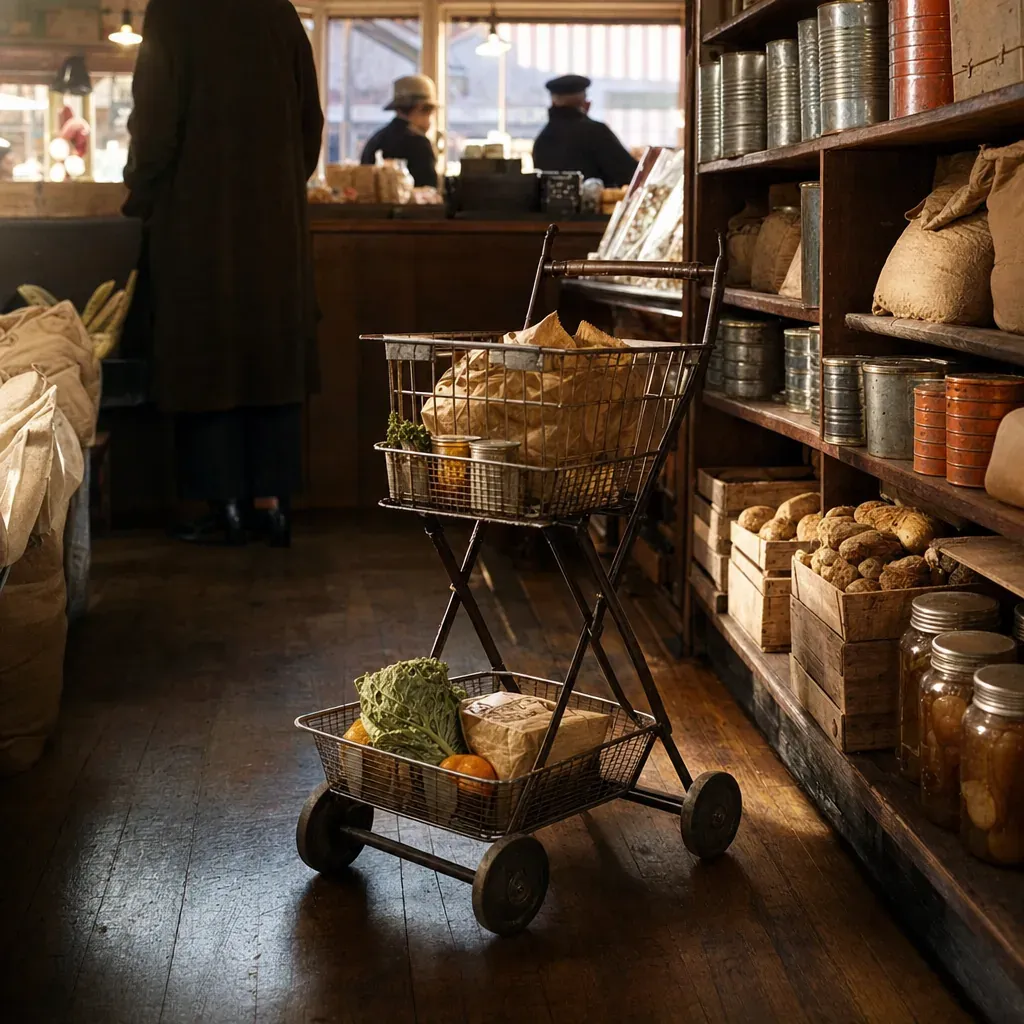
Before the shopping cart became the background music of grocery stores, it was an odd little thing: a folding chair frame on wheels, carrying two wire baskets like a stack of errands. The problem it solved was as plain as sore fingers. By the 1930s, Sylvan N. Goldman was running grocery stores in Oklahoma City. What he wanted was simple: for customers to keep shopping a little longer, without being defeated by the weight of a hand basket. He had noticed something any grocer could understand — once the basket got heavy, the buying stopped. So Goldman looked at that small, stubborn problem and tried to make it roll. Working with a mechanic named Fred Young, he came up with a solution that was not sleek or glamorous. They took the frame of a folding chair, put it on wheels, and stacked two wire baskets on it. It was part furniture, part helper, part “well, why not?” On an early June day in 1937, Goldman introduced the new folding basket carriers in his Oklahoma City stores. You can picture the scene: shoppers moving through the aisles with hand baskets on their arms, the new carriers waiting nearby, ready to save everyone a little strain. And then, wonderfully, almost nobody wanted them. The invention that would one day become nearly invisible in everyday life looked strange at first. Some women thought pushing one felt too much like pushing another baby carriage, and who could blame them for not wanting their grocery trip to feel like one more round of nursery duty? Some men thought the whole thing looked undignified. A grown man, strolling around behind a wheeled basket carrier? Apparently not. Goldman had solved the problem, but the solution had created a new one: people didn’t want to be the first to look silly. That’s where his gift for showmanship came in. Goldman did not scold his customers or give up on the carts. Instead, he made the new idea look normal. He hired people to walk around the store cheerfully using the basket carriers, as if this were simply what sensible shoppers did. He also had an employee offer them to customers as though everybody was already in on it. The trick was gentle, almost neighborly. No big speech. No grand announcement. Just other people rolling through the aisles with ease, filling baskets without the familiar tug on the arm. A person could glance over and think, “Well, they don’t look ridiculous.” Maybe even, “That does look easier.” Soon, the odd little contraption wasn’t quite so odd. Customers began using it. The folding basket carrier did what Goldman had hoped it would do: it let people shop without stopping just because their basket had become too heavy. From that small Oklahoma City experiment came something that spread far beyond one grocer’s aisles. The little rolling helper became a fixture of modern life, so common now that most of us only notice a cart when it has a wobbly wheel or refuses to separate from the row. Goldman’s idea worked not because people immediately knew they needed it, but because he understood something tender and funny about human nature. Sometimes we don’t need arguments. Sometimes we just need to see someone else try the strange new thing first. And then we roll right along.

Listen to this story, narrated.