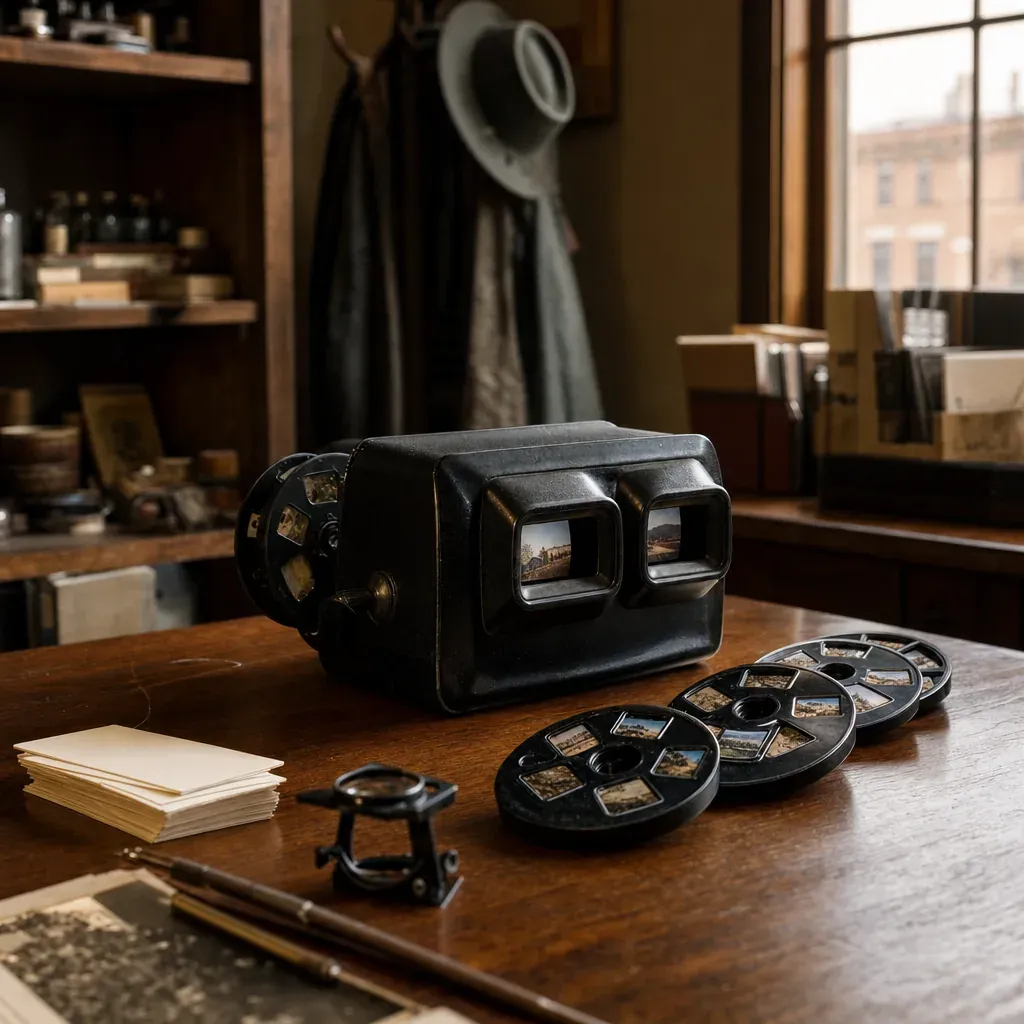
The View-Master and the Oregon Cave Trip That Began with a Funny-Looking Camera
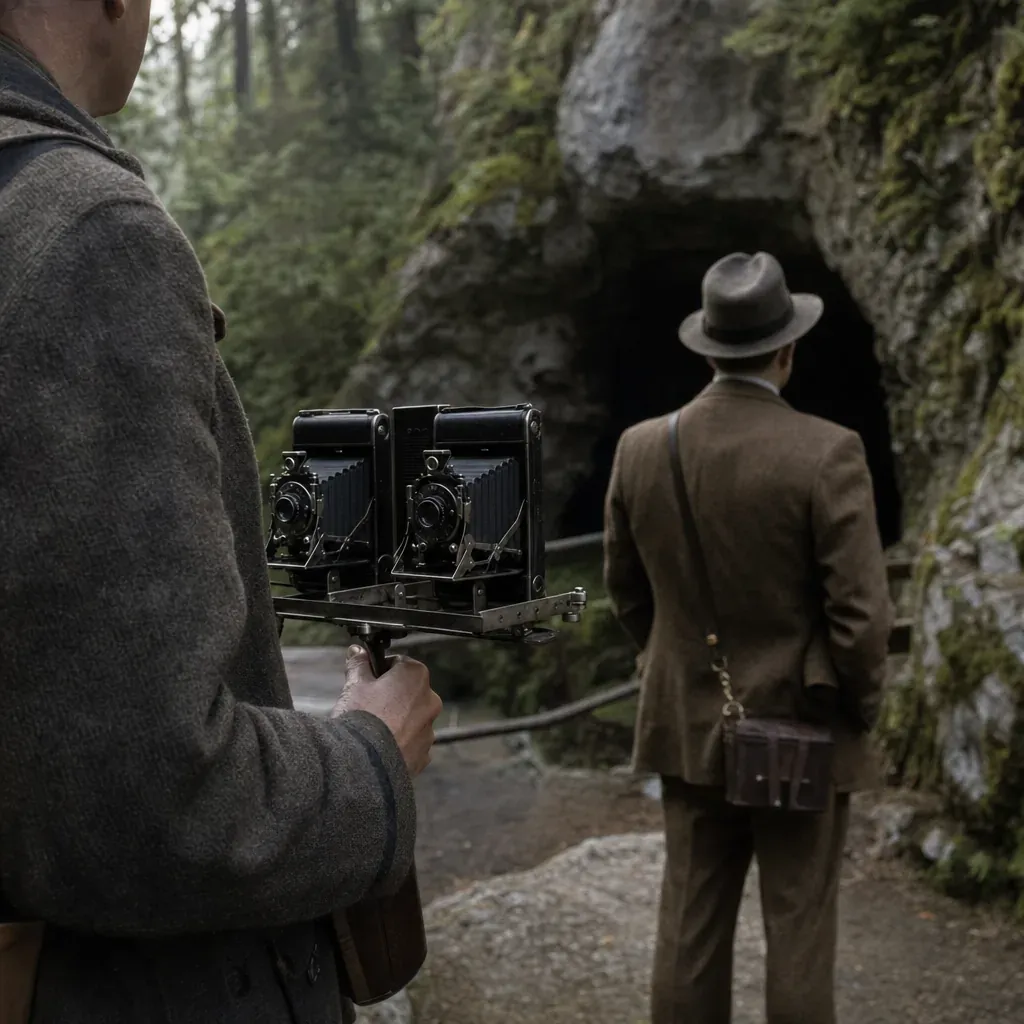
Near the Oregon Caves, a vacation camera looked less like a camera than a small mechanical sandwich: two Kodak Bantams fastened together, ready to blink at the scenery in stereo. William B. Gruber was the man behind the contraption. German-born and living in Portland, he made organs, tuned pianos, and carried the sort of photographer’s curiosity that doesn’t stop at “good enough.” He wanted pictures that didn’t just show a place, but seemed to let you step into it. So in 1938, while visiting Oregon Caves, Gruber brought his homemade stereoscopic camera rig. One camera would have been enough for an ordinary vacation album. Gruber brought two, mounted side by side, because he was after paired Kodachrome color slides — two tiny images taken from slightly different angles. Seen through the right viewer, they would merge into a single scene with depth. It was the kind of setup that could make another traveler pause mid-stride. And one did. Harold J. Graves, president of Sawyer’s, a Portland company known for photographic postcards, noticed the man with the odd little rig. A postcard man could have walked right on by. He had probably seen plenty of cameras in scenic places. People have always liked to point lenses at rocks, trees, caves, and one another standing awkwardly in front of all three. But Graves paid attention. The question at the heart of the story was as plain as it gets: “What is that?” Gruber explained. Two cameras. Two color slides. One 3-D image when viewed properly. Not a flat keepsake, but a little window with depth — a way to make a vacation scene feel present again after the trip was over. At Oregon Caves, before the idea had a famous name, it was still just a man with a very complicated way of taking vacation pictures and another man curious enough to ask about it. The conversation became a partnership. Gruber had the idea. Sawyer’s had the manufacturing and marketing strength to bring it to customers. By the next year, the View-Master was introduced — not first as a toy, but as a modern cousin to the postcard. Its earliest appeal was armchair travel: crisp little 3-D glimpses of scenic places, tucked into a handheld viewer. The reels were round, neat, and almost cheerful-looking, like tiny wheels for the imagination. Each held seven stereoscopic views. You put a reel into the viewer, held it up, and with one click of the lever, one small world made room for the next. There’s a gentle joke sitting right in the middle of it all. The famous gadget began because a postcard executive met a piano-tuning, organ-making photographer who had made sightseeing delightfully complicated. Graves didn’t see a nuisance or a novelty to be ignored. He saw possibility. And Gruber didn’t see photographs as flat souvenirs. He saw them as places you could almost enter. Over the decades, View-Master reels would carry children and grown-ups far beyond that Oregon meeting place: the Grand Canyon, fairy-tale castles, outer space, cartoon kingdoms, national parks and Disney characters, all spinning through its little windows one lever-click at a time. But before all that, there was Oregon. There was a cave trip. There was a curious businessman, a Portland tinkerer, and an odd camera rig that made someone stop instead of passing by. Sometimes a whole new view begins with a simple question.