Snowflake Bentley, and the Farm Parents Who Bought a Camera for Ice
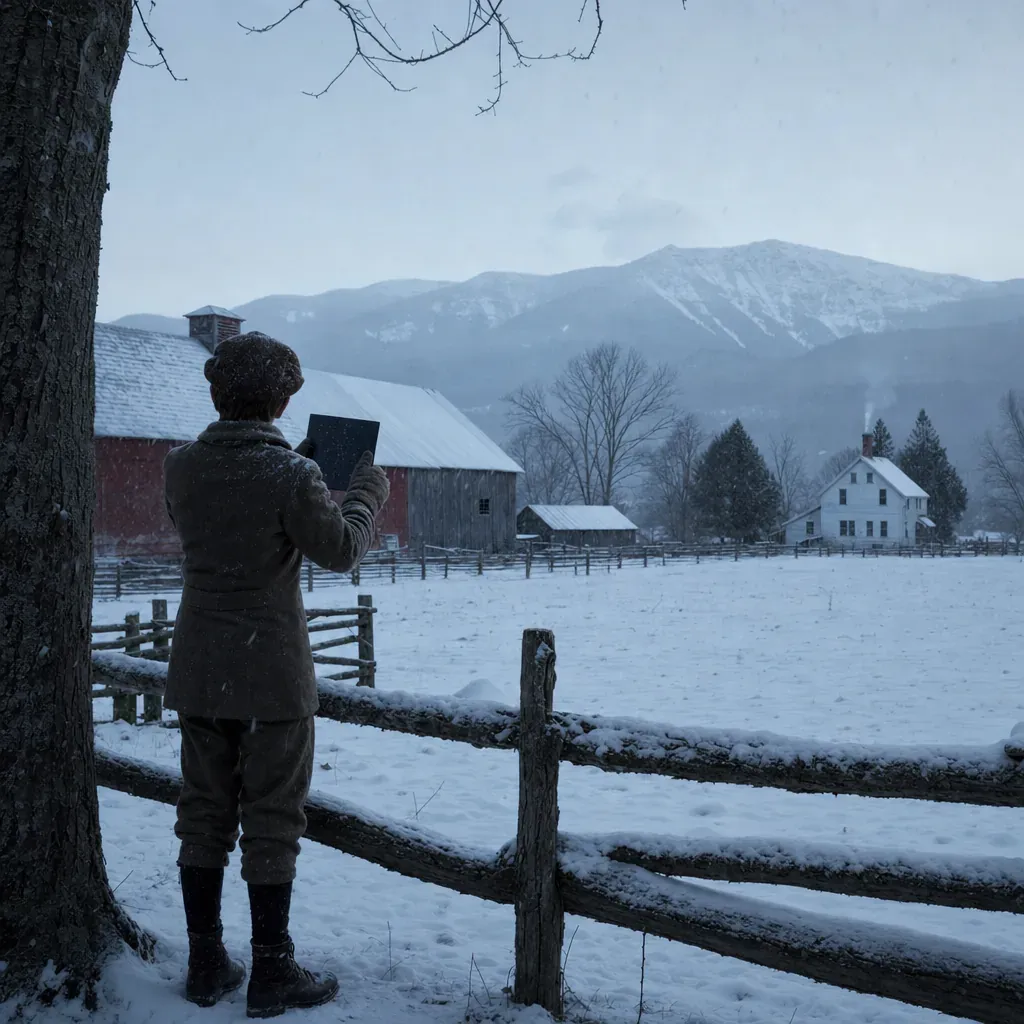
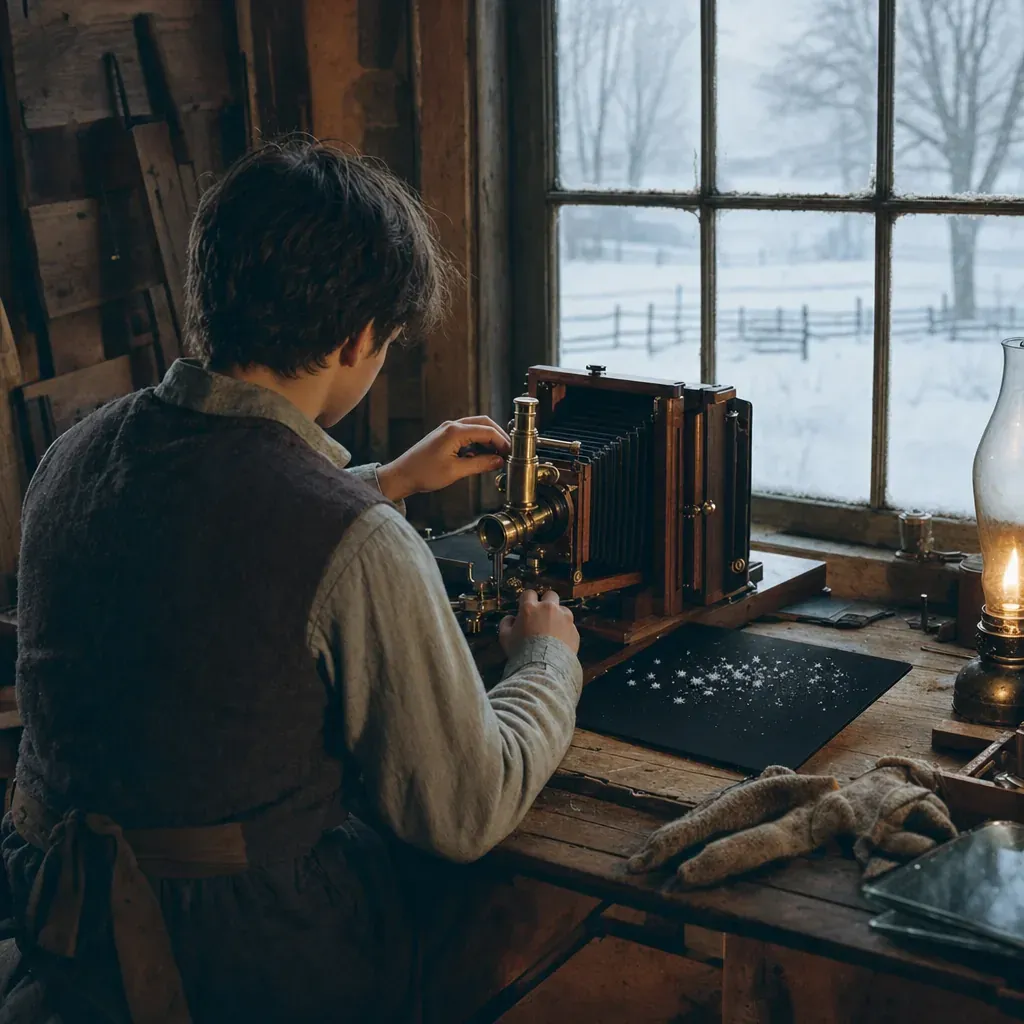
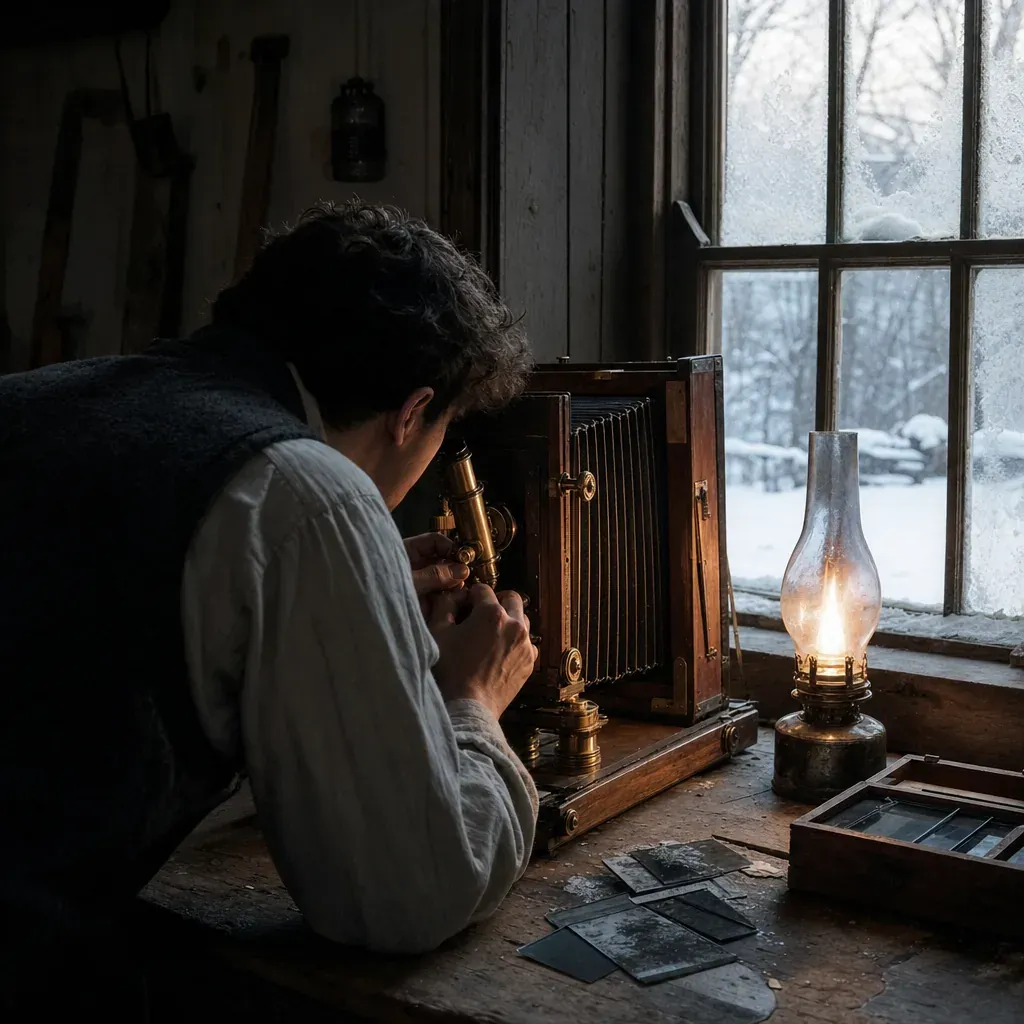
Snow in Jericho, Vermont, could arrive like a hush over the fields, softening fence rails, barn roofs, and the shoulders of Mount Mansfield. But for one farm boy, the real wonder was smaller than a mitten button and gone almost before you could blink. Before Wilson A. Bentley became the Vermonter whose snowflake photographs taught generations that no two looked alike, he was a curious boy on his family’s farm, looking closely at weather everyone else mostly shoveled. What he wanted was simple and nearly impossible: to hold a snow crystal still long enough to show people what he saw. His mother, Fanny, had been a schoolteacher, and she encouraged that curiosity instead of waving it away as farm-boy foolishness. When Bentley was a teenager, she gave him a microscope — a fine gift for a boy who liked to look closely, and, in a Vermont winter, an invitation to chase disappearing things. He began trying to draw snow crystals before they melted. That sounds charming until you picture it: a young man bending over a microscope while winter itself sits on the slide, delicate and temporary, acting as if it has a train to catch. Each crystal had its own branching pattern, its own tiny architecture, and then — with the warmth of breath, fingers, lamplight, anything — it would vanish. Asking a snowflake to pose for a drawing was about as sensible as asking a snowbank to sit still for a portrait. Still, Bentley kept looking. The turn came when he persuaded his parents to help him get a camera that could be attached to the microscope. On a dairy farm in the 1880s, this was not the sort of practical purchase that helped milk cows, mend fences, or get hay into the barn. It was expensive. It was odd. It was the kind of thing a household could easily have dismissed with a sigh and a firm no. But his parents took him seriously. So there he was, in the cold, trying again and again to make the camera and microscope do what his pencil could not. There was trial. There was error. There must have been plenty of numb fingers and failed plates. A snow crystal is not a patient subject. It does not wait while a young Vermonter adjusts equipment. It does not care that the light is wrong or the focus is fussy. Then Bentley succeeded. He made what is widely recognized as the first successful photograph of a single snow crystal. Imagine the quiet of that moment. The farm. The winter air. The strange contraption of microscope and camera. And then the little miracle made visible: one snow crystal, preserved long enough for other eyes to see it. Neighbors later knew him, not unkindly, as “Snowflake” Bentley. It’s hard not to smile at that. Some people get nicknames for loud laughs or fast horses or the way they wear their hat. Bentley got his for paying attention to snow. He didn’t stop with one photograph. He kept at it for the rest of his life, making more than 5,000 photographs of snow crystals. He shared them with scientists, schools, and the public, carrying the fragile beauty of a Vermont storm far beyond the field where it fell. Near the end of his life, his work became a book, “Snow Crystals,” prepared with William J. Humphreys of the U.S. Weather Bureau. It included more than 2,000 images. By then, the quiet farm boy’s fascination had become something teachers could place before students, scientists could study, and ordinary people could marvel over on a winter day. The sweetest part of the story is where it begins. Not in a grand laboratory, not with a committee or a famous institution, but on a Vermont farm, with parents who noticed that their weather-struck son was reaching for something real. They bought the camera; he gave winter a face.
Listen to this story, narrated.