When Jerrie Mock Landed and They Looked for the Pilot
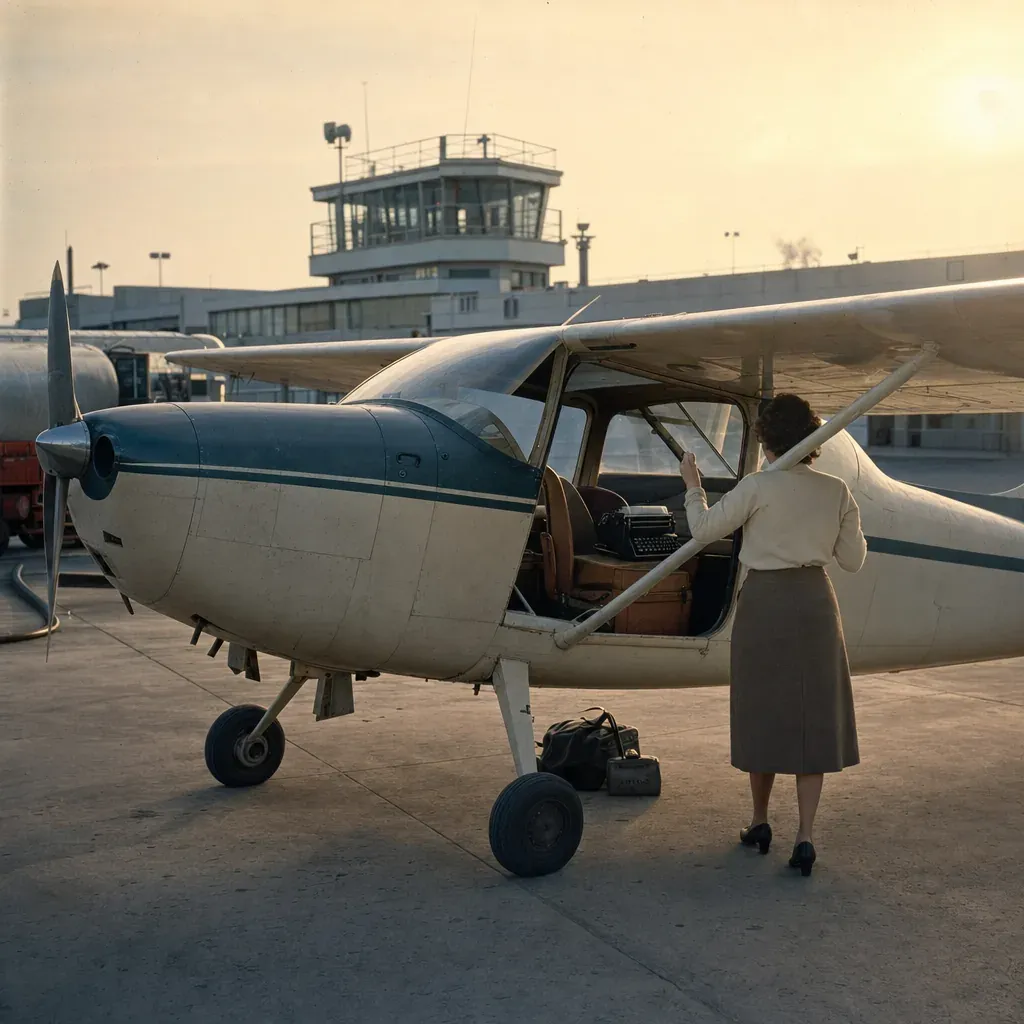
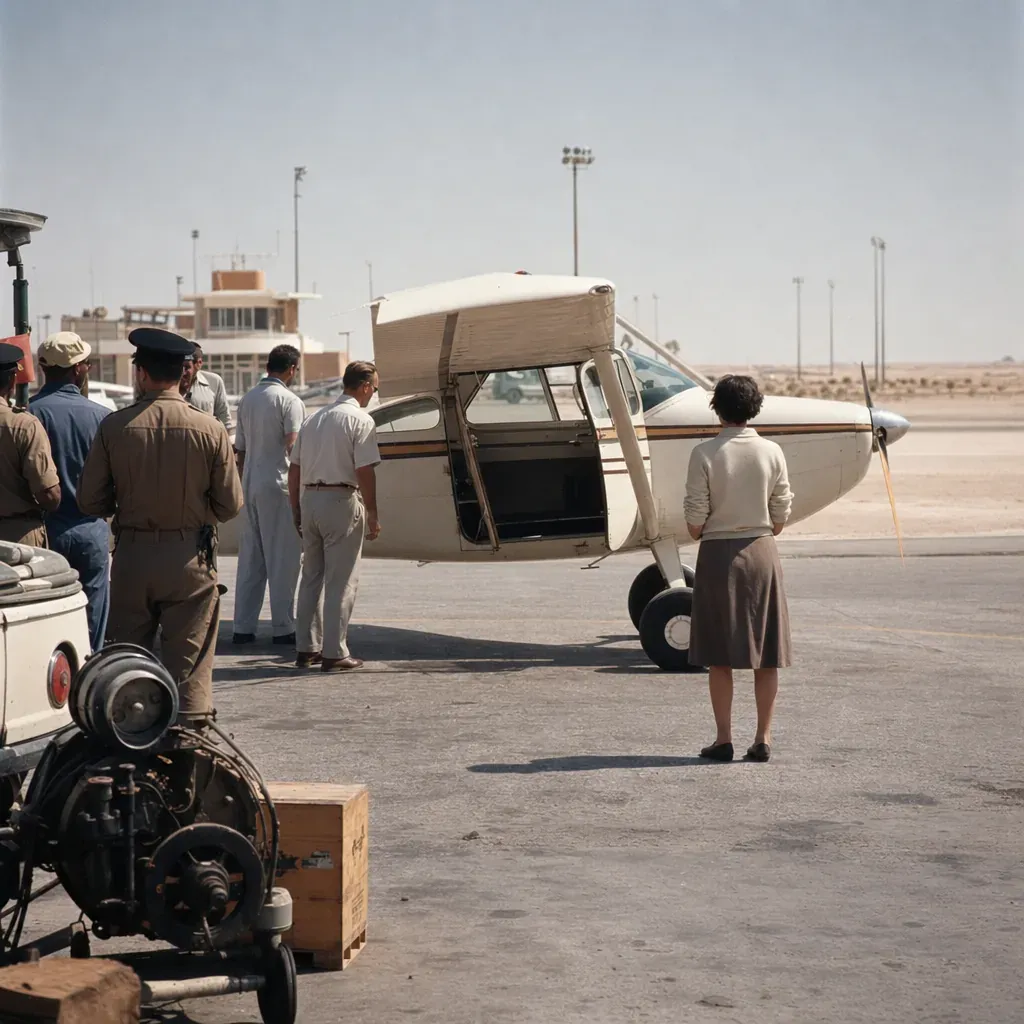
A typewriter went around the world in a little Cessna, tucked in with a woman who had no interest in looking heroic. Geraldine “Jerrie” Mock wore a skirt and sweater, climbed into “Three-Eight Charlie,” and set out like someone running an errand that happened to be 23,000 miles long. Jerrie was 38, a mother of three from Bexley, Ohio. On March 19, 1964, she took off from Port Columbus Airport in a single-engine 1953 Cessna 180, the kind of airplane that did not exactly suggest glamour, but did suggest nerve, patience, and maybe a good sense of humor. What she wanted was simple: she wanted to see the world. Not conquer it. Not pose grandly beside it. See it. So she packed her typewriter, settled into the airplane she called “Three-Eight Charlie,” and pointed herself away from home. The trip would take her across the Atlantic, North Africa, the Middle East, Asia, and the Pacific. Twenty-nine days. Roughly 23,000 miles. Stop after stop, each one another small proof that the woman in the skirt and sweater was not passing through the story — she was flying it. There is something wonderfully practical about that image: Jerrie Mock, mother of three, leaving Ohio with a typewriter on board, as if she might need to get some thoughts down between continents. The airplane’s name sounded like a friend being called from the porch. Three-Eight Charlie. Not a sleek movie-star machine. A faithful little craft with a job to do. And then came Dhahran, Saudi Arabia. As Mock later recounted, when she arrived there, officials and airport workers began looking into and around the small airplane for the pilot. It is easy to picture the scene: faces leaning toward the cockpit, glances moving past the neatly dressed woman standing right there, everyone trying to locate the person they assumed must be hidden somewhere. Maybe behind a seat? Maybe already stepped away? Maybe the pilot had vanished into thin air, which would have been quite a trick after crossing all that sky. But no. The pilot was Jerrie. There was no hidden man, no secret crew tucked into the Cessna like a magician’s assistant. Just Geraldine “Jerrie” Mock, standing beside “Three-Eight Charlie,” having flown herself there. The moment has the shape of a gentle punch line: everyone searching for the pilot while the pilot waits politely in plain sight. That turn is the heart of the story because it’s funny, and because it is so clear. Sometimes change arrives with thunder. Sometimes it arrives in a small airplane, with a woman in a sweater, and a group of people suddenly realizing they’ve been looking past the answer. Jerrie kept going. Across more stops, more miles, more water, more sky. The typewriter stayed with her. The Cessna stayed with her. And somewhere along the way, what had begun as a practical Ohio wish — to see the world — became something larger, though she never needed to dress it up. The facts did that all by themselves. On April 17, 1964, she brought “Three-Eight Charlie” back to Port Columbus. A crowd was waiting. The little airplane had gone out into the wide world and come home, and the woman at the controls had become the first woman to fly solo around the world. Afterward, President Lyndon B. Johnson awarded her the Federal Aviation Agency’s Gold Medal for Exceptional Service. Mock later titled her book about the journey Three-Eight Charlie, keeping the name of that faithful Cessna right at the center of it. But the warmest part still feels like that airport scene in Dhahran: people searching for the pilot, and Jerrie Mock standing there all along. Home must have looked pretty good from the runway.
Listen to this story, narrated.