The Bus That Went to the Future Without Leaving the Block
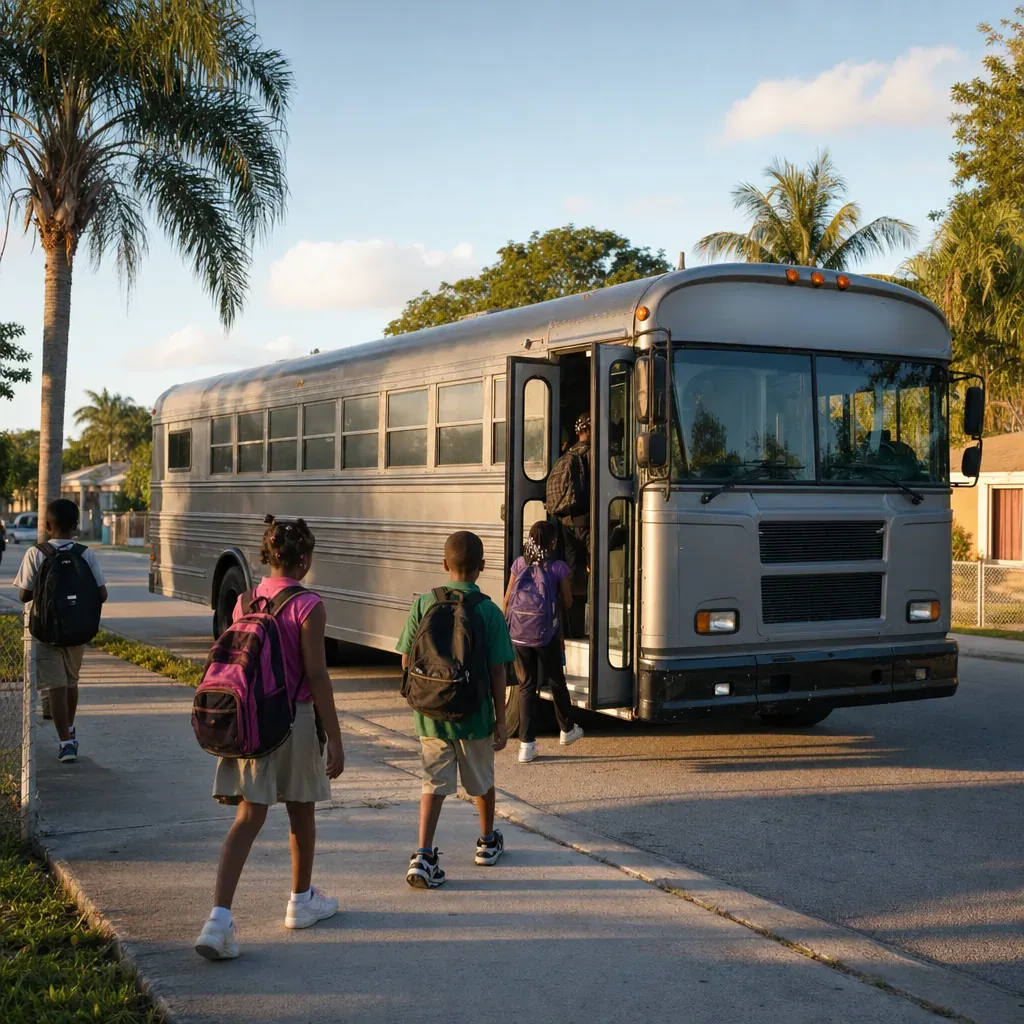
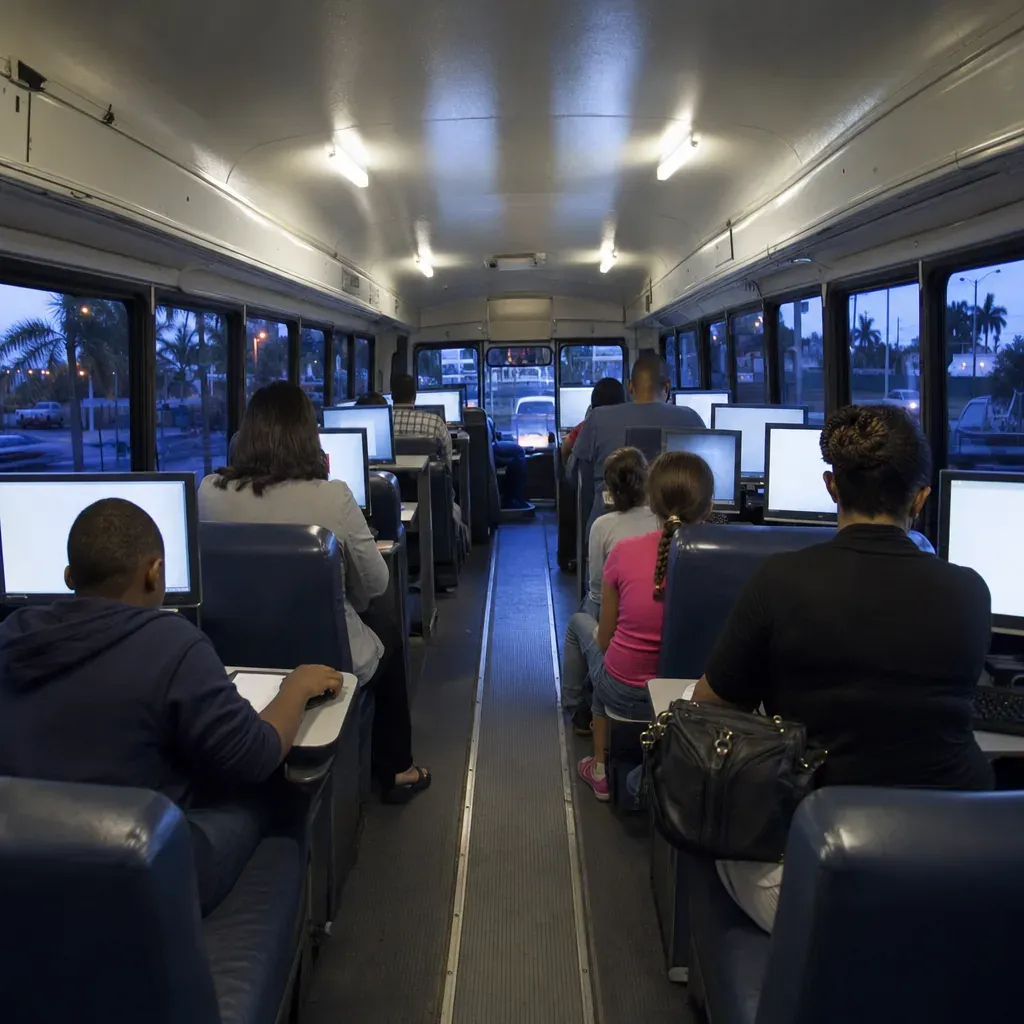
The oddest classroom in West Palm Beach was 40 feet long and had wheels. It didn’t wait at the end of a hallway; it rolled toward the children who needed it. Estella Pyfrom had spent decades in Palm Beach County schools as a teacher and guidance counselor. By retirement, she knew students’ struggles didn’t end when the last bell rang. What she wanted was simple: for children in low-income neighborhoods to have a fair shot at doing the same homework as everyone else. The problem was small enough to fit on a kitchen table and big enough to block a future. Teachers were assigning work online. But many students didn’t have a reliable computer at home, or internet access, or both. A child could understand the lesson, remember the assignment, sit down after school ready to do it—and still be stuck before typing the first word. Pyfrom had seen enough school days to know that “try harder” doesn’t plug in a laptop. She also knew that a child who falls behind for reasons outside their control can start to believe school isn’t for them. That was the part she couldn’t accept. So she came up with a fix that was wonderfully direct. If children couldn’t easily get to the technology, she would bring the technology to them. In 2011, Pyfrom used about $900,000 of her own savings to create Estella’s Brilliant Bus. It was a 40-foot mobile computer lab, fitted with computer stations and internet access. Not a fancy theory. Not a committee report. A bus. There’s something almost funny about the brilliance of it. A bus is usually the thing that takes students somewhere else. This one showed up so they could move forward without going much farther than across the street. After school, children climbed aboard and got to work. The bus gave them a place to finish assignments that would have been out of reach at home. Instead of staring at homework that required a connection they didn’t have, they could sit down at a computer, log on, and do what their teachers had asked them to do. And the bus didn’t belong only to children. Adults came, too, using the computer access for job-search help. A mobile classroom became a neighborhood resource, practical in the most human way: here is the tool you need, and here it is close enough to use. That was the turn in Pyfrom’s story. She didn’t just notice the digital divide; she parked a solution beside it. Her years in education had taught her where the gap was, and retirement gave her the chance to answer it on her own terms. CNN later named Pyfrom one of its 2013 Top 10 Heroes, a national spotlight for a deeply local idea. But the heart of it stayed in West Palm Beach, with students stepping onto a bus after school and adults finding help with the next application, the next search, the next chance. Estella’s Brilliant Bus did what good teachers have always done: it met people where they were. And sometimes, hope pulls up to the curb.
Listen to this story, narrated.