How an Alabama Phone Company Beat AT&T to 911
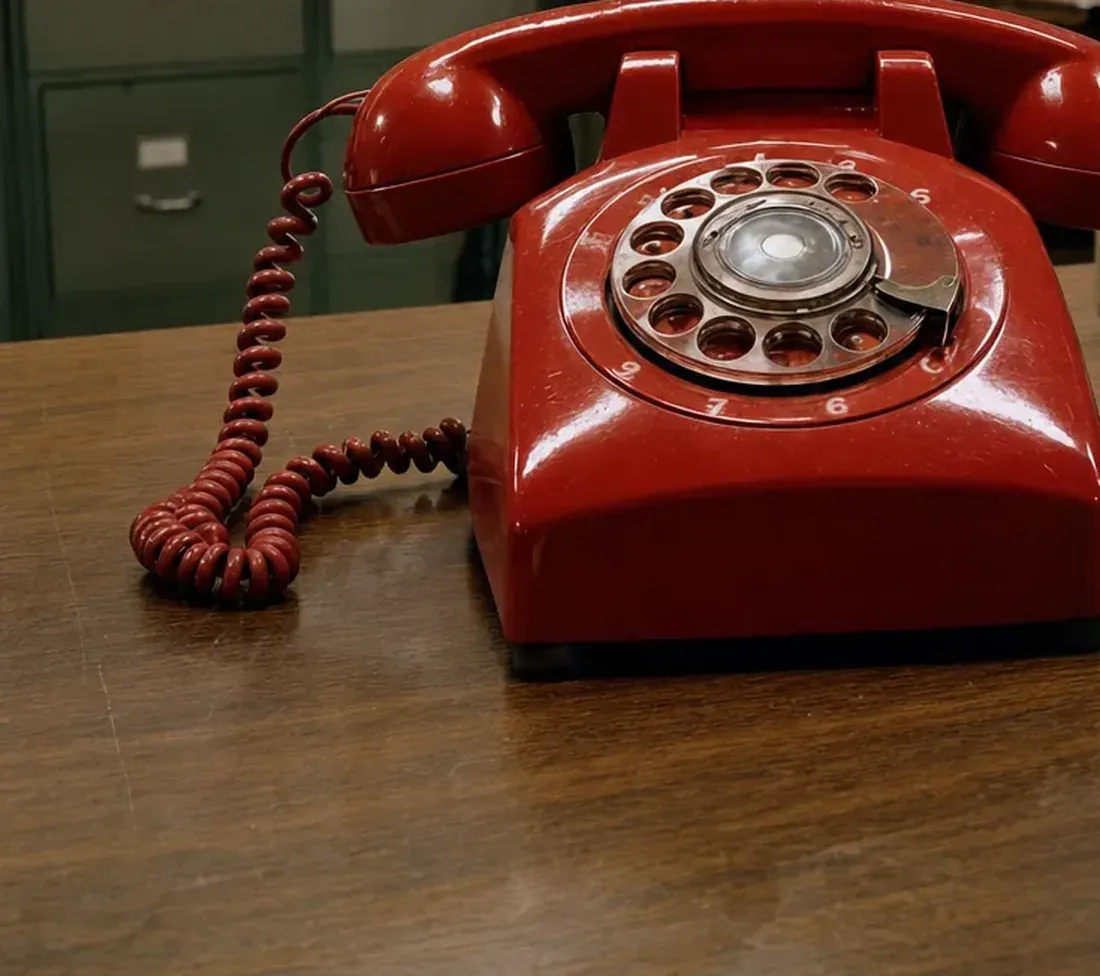
A red phone in Haleyville’s police station received the first 911 call, placed from the mayor’s office in the same building.
Bob Gallagher wanted to beat the biggest telephone company in the country to three numbers.
Nine. One. One.
At 2 p.m. on February 16, 1968, he stood at the police station in Haleyville, Alabama, as a red phone rang. A congressman picked it up. A state politician was on the other end, and the first 911 call in the United States had begun.
The call was a ceremony, not a plea for help.
It had taken a newspaper story and a burst of competitive spirit to get Gallagher to that phone.
On January 12, 1968, AT&T, the biggest telephone company in the country, called a press conference in the Washington office of Indiana Congressman Ed Roush, who had been pushing for “one number” Americans could dial in an emergency. The number, AT&T announced, would be 911.
Before 911, people with emergencies sometimes had to call several numbers before they reached the right one. Mary Boyd, a former president of the National Emergency Number Association, put the problem plainly: “So if you’re having a heart attack, that’s not what you want.”
But AT&T’s plan covered only its own Bell companies. The country’s many small, independent phone companies weren’t part of it.
In Alabama, Bob Gallagher noticed. He was president of the Alabama Telephone Company, one of those independents working in the shadow of the giant, and he read about AT&T’s plan in the Wall Street Journal. He was not pleased that companies like his had been left out of the conversation.
The number was meant to be easy to remember and available across the country. For Gallagher, being left out of the announcement did not mean his company had to wait for AT&T to make the first call.
So he decided to do something about it. Gallagher took the idea to his boss at the parent company, and later recalled their exchange.
“I told him I think we can do a 911 system and beat AT&T out,” Gallagher said. “And he said go get ’em. And off we went.”
Gallagher wanted to put 911 in first, somewhere in his company’s territory. He called Robert Fitzgerald, the company’s inside state plant manager, and Fitzgerald chose the spot: Haleyville, a town in northwest Alabama. The reasons were practical rather than romantic. The company was already working on the telephone exchange there, which made a new system easier to install. In 1968, the whole town ran on that one exchange.
Fitzgerald designed the circuitry. Then he and four technicians, Jimmy White, Glenn Johnston, Al Bush and Pete Gosa, went to work on the central office and installed a red 911 telephone.
The job took them less than a week. Once it was finished, anyone in Haleyville who dialed 911 would reach that red phone at the police station.
On February 9, Gallagher sent out a press release. Starting February 16, the people of Haleyville would be able to dial 911. The announcement gave the town a date for the new service, and Gallagher’s challenge to the larger company was about to become something people could use.
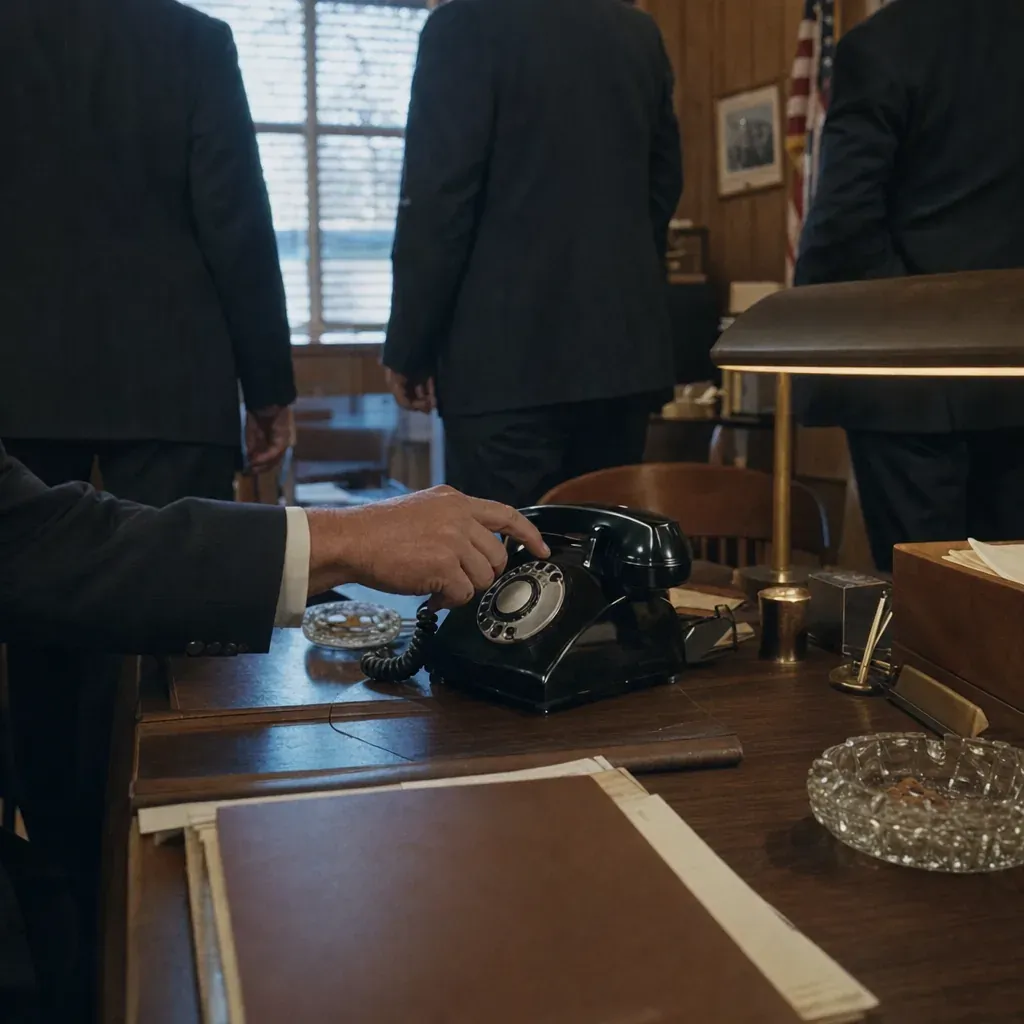
When the day came, the first caller was Rankin Fite, the Speaker of the Alabama House of Representatives. He placed the call from the mayor’s office at Haleyville City Hall, with Mayor James Whitt beside him. The mayor’s office and the police station were in different parts of the same building.
At the other end, the red phone rang at the police station. It was answered not by a police officer but by U.S. Congressman Tom Bevill, with Gallagher there to watch.
Bevill picked up the red phone and, reportedly, said “Hello.”
Meanwhile, Fitzgerald was at the central office serving Haleyville, watching the call pass through the equipment as the mechanical switches clunked out the three numbers.
The ceremony brought Gallagher’s wager to life. He had wanted his company to put 911 into service ahead of AT&T, and here was a call passing through Fitzgerald’s circuitry to the red phone. It linked two rooms in one building, but it showed that three digits could connect a caller to a place ready to answer.
Haleyville’s first call came just 35 days after AT&T announced the number. The small Alabama company had beaten the phone giant to the finish line. AT&T implemented 911 in Huntington, Indiana.
Boyd, looking back on it, gave Haleyville its due. “Haleyville … set the course for other communities to see it could be done,” she said.
In Haleyville, a highway sign has welcomed visitors with the words “Haleyville — Where 911 Began.” Banners on the street lights have carried the town seal, featuring a red phone receiver and the words “Home Of 911.”
In 2018, the red rotary phone that took that first call sat in a clear case in a special alcove, surrounded by framed proclamations and newspaper clippings. Sunseri said the phone drew eight to ten visitors a week, particularly 911 dispatchers.
Today, an estimated 240 million calls are made to 911 in the United States every year.
One of Haleyville’s own dispatchers, Ronnie Wilson, answered the town’s 911 line for almost twenty years. He remembered a call from a woman whose baby was choking and turning blue. Wilson talked her through infant CPR over the phone, until he heard something wonderful on the other end of the line.
The baby started to wail.
“I knew then that we was home free,” Wilson said.
Listen to this story, narrated.
Sources
- 9-1-1 History — NENA of Alabama
- How A Sneaky Alabama Town Launched America's 911 System — GBH / WBHM
- “This is 9-1-1. What is your emergency?”: A history of raising the alarm — Smithsonian National Museum of American History
- 911 Has Been Emergency Number for Forty Years — NPR
- 9-1-1 Statistics — National Emergency Number Association