Snowboarding Started as a Christmas Toy in Muskegon—and Mom Gave It Its Funny Name
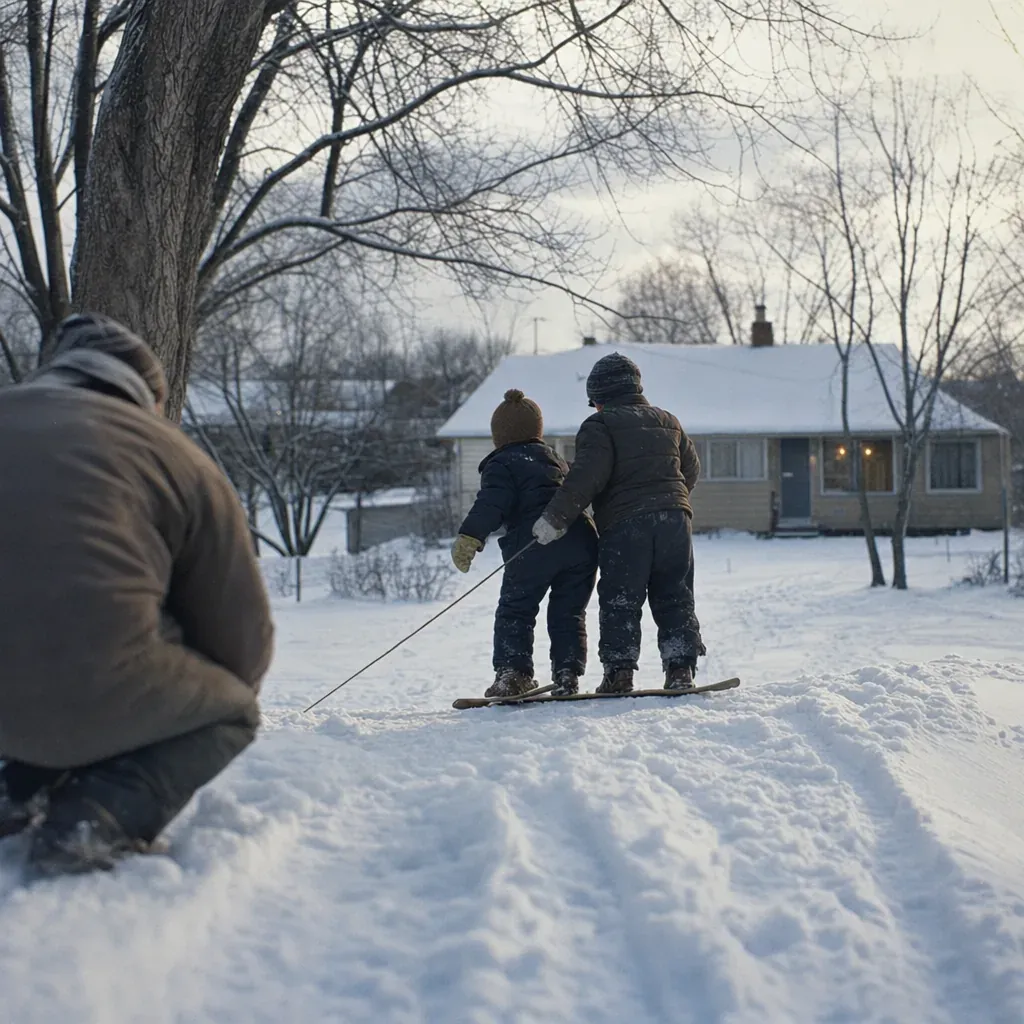
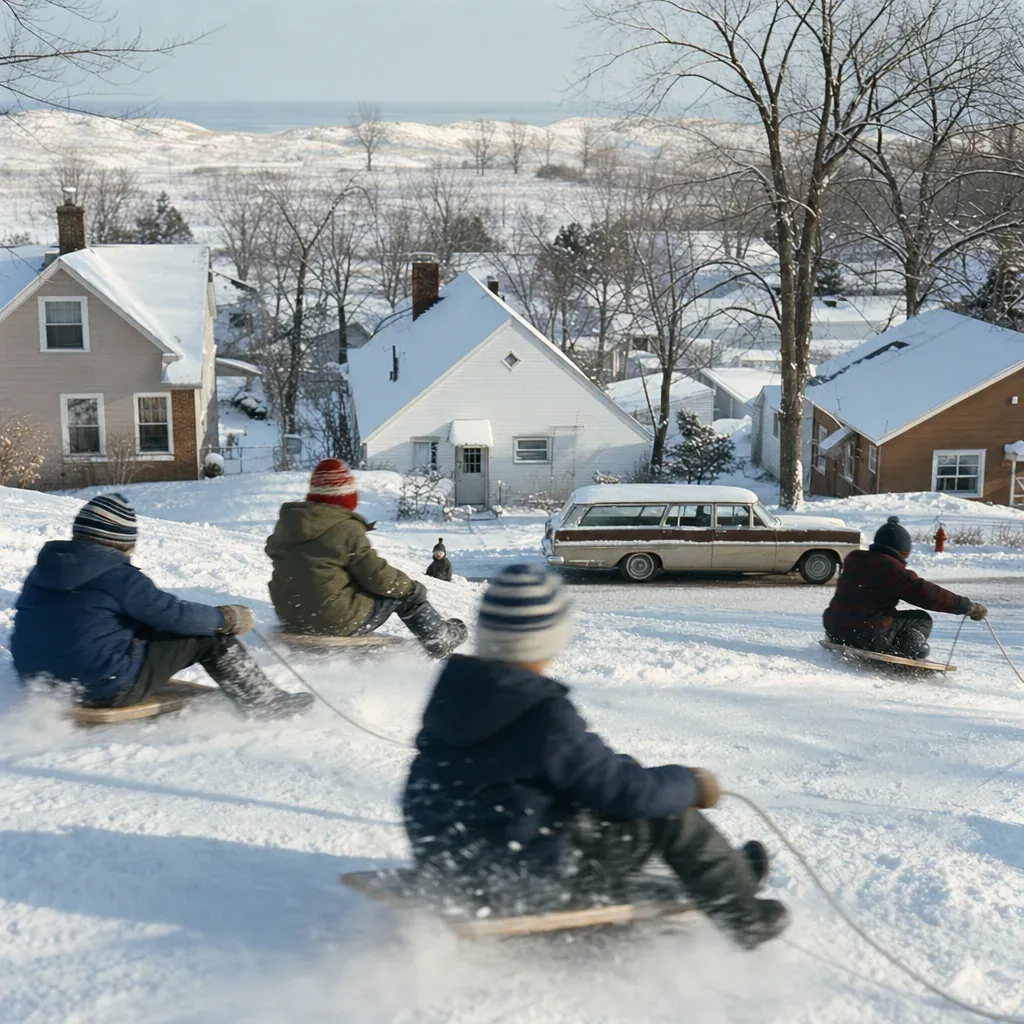
The first Snurfer was not born in a factory or a stadium. It began with the scrape of skis, the squeak of a rope, and the kind of snowy Michigan yard where a child can turn a small hill into a whole afternoon. Sherman Poppen was in Muskegon, Michigan, trying to make Christmas more fun for his daughters, Wendy and Laurie. He was an engineer and inventor, the sort of dad who looked at snow and saw parts. What he wanted was simple: a better way for his girls to play outside. So he took two children’s skis and fastened them together. That was the practical part. Then came the inspired part. Poppen added a rope to the front, giving Wendy and Laurie something to hold while they stood sideways and rode down the hill. It wasn’t quite a sled. It wasn’t quite a surfboard. It was a wobbly, homemade winter creature all its own, the sort of thing that probably made perfect sense once you were already halfway down the hill. You can picture it: two girls in the snow, boots planted sideways, hands gripping the rope, trying not to topple over while this strange little board skims forward. The cold air would have done its usual Michigan work, pinking cheeks and sneaking into mittens. Somewhere nearby was the sound every parent knows in winter: children laughing hard enough that the snow itself seems in on the joke. The neighborhood noticed. Of course it did. A child sliding downhill on lashed-together skis is not exactly subtle. It had the cheerful oddness of a backyard invention that looks a little impossible right up until it works. And this one worked well enough that it needed a name. That was where Nancy Poppen came in. Sherman had made the thing. Nancy gave it its grin. She called it a “Snurfer,” blending snow and surfer, a word so bouncy it feels as if it should be wearing a pom-pom hat. It was the perfect household punch line, and also the perfect product name: silly, clear, and almost impossible to say without smiling. What started as a family toy soon moved beyond the Poppens’ yard. Sherman Poppen filed for a patent in 1966, and his “surf-type snow ski” was granted U.S. Patent No. 3,378,274 on April 16, 1968. The description sounded official, but the heart of it was still that first backyard ride: standing sideways on snow, holding on, and trusting the hill. Brunswick sold the Snurfer nationally. Hundreds of thousands were made. Kids who had never heard the word snowboarding learned the feeling anyway: the balance, the sideways stance, the small thrill of pointing a board downhill and discovering, very quickly, that snow could be surfed. Years later, snowboarding would have halfpipes, commentators, athletes, teams, sponsors, lift-line confidence, and all the shine that comes when a backyard feeling becomes a sport watched around the world. Poppen lived long enough to see snowboarding reach the Winter Olympics in 1998. He was also inducted into the U.S. Ski and Snowboard Hall of Fame, a long way from a Michigan Christmas and two children’s skis tied together. But the sweetest part of the story still feels small. It’s Sherman Poppen in Muskegon, trying to make something fun for Wendy and Laurie. It’s Nancy hearing or seeing this funny new contraption and giving it a name cheerful enough to stick. It’s a family yard, a snowy hill, and an invention that began not with a business plan, but with a dad thinking, “This might make the kids happy.” And then it did.
Listen to this story, narrated.