The Drive-In Movie: The New Jersey Inventor Who Tested It with a Bedsheet and a Sprinkler
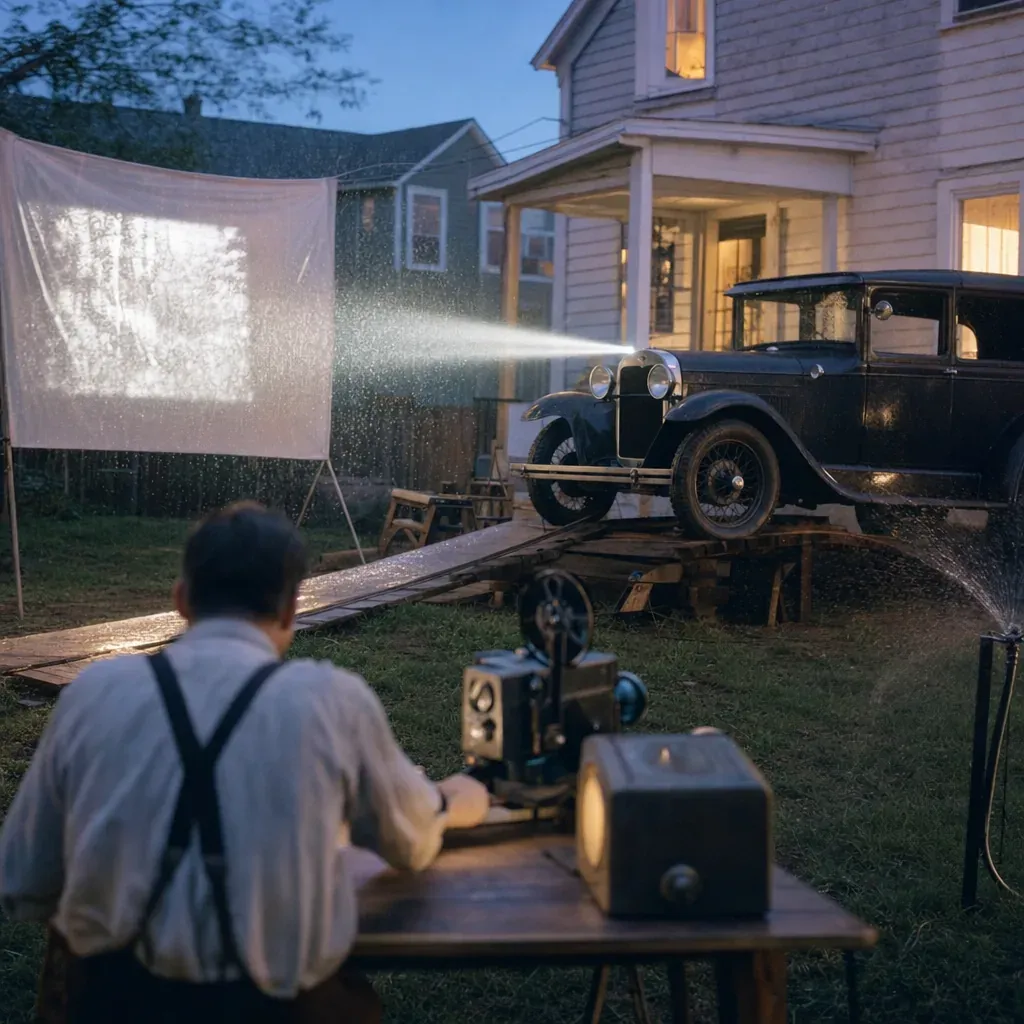
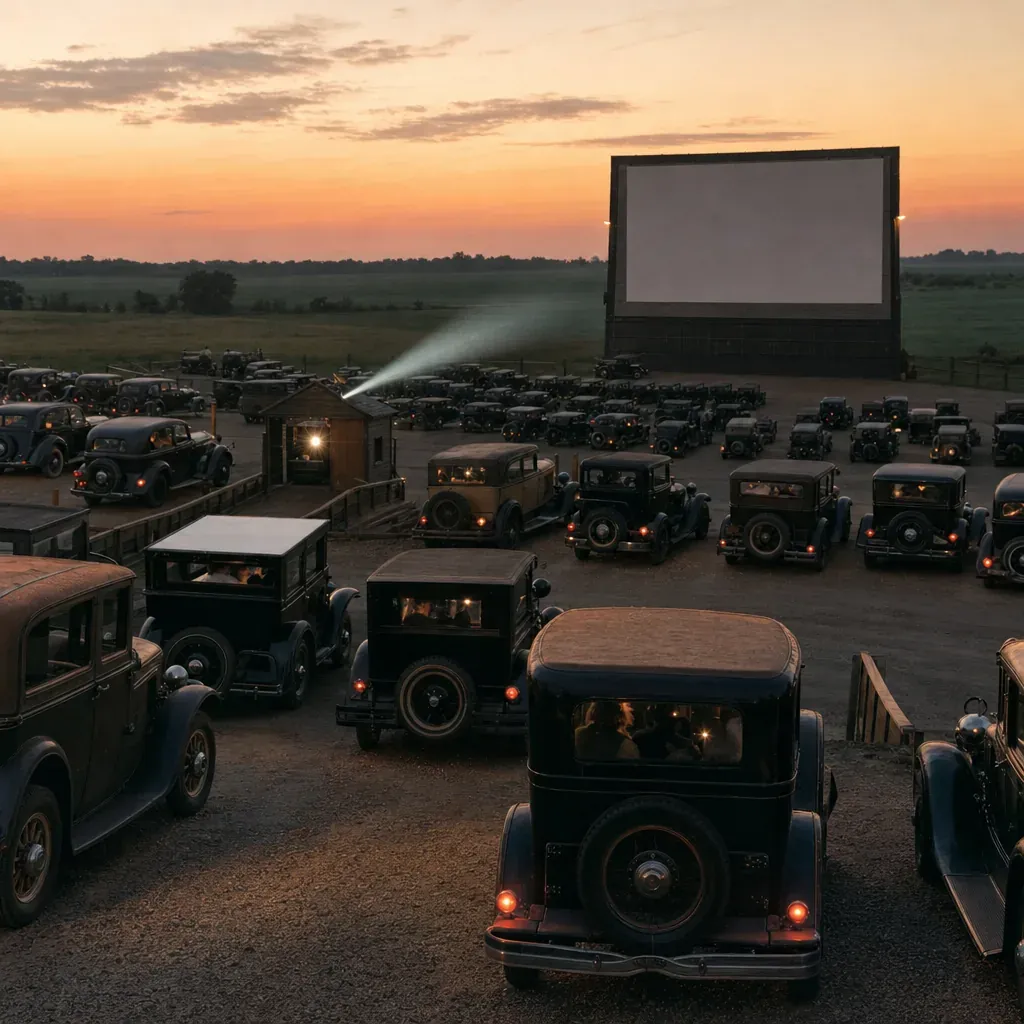
Before the drive-in became a summer night of popcorn, taillights, and kids in pajamas, it began with a lawn sprinkler. In a New Jersey driveway, Richard Milton Hollingshead Jr. sprayed water at a movie screen just to see what rain might do. Hollingshead worked for his family’s R.M. Hollingshead Corporation in Camden, and he had a question that was simple and wonderfully odd: could people watch a movie comfortably from their cars? Not just sit there for a few minutes, but really watch one — parents, children, couples, anyone who liked the idea of entertainment without leaving the little world of their own automobile. In 1932, he began testing the idea at home. He stretched a screen outdoors. He set up a projector. He used a radio for sound. Then he arranged cars at different heights, experimenting with sight lines so people in the back wouldn’t spend the whole picture staring at another car roof. It was part engineering, part showmanship, and part backyard mischief. You can almost hear the sprinkler chattering across the lawn as Hollingshead checked what rain would do to the image. Most people, faced with bad weather, might have taken the equipment inside and called it a night. Hollingshead turned on the water. There’s something endearing about that: a future American pastime being tested with the same tool someone might use to save the tomatoes. The experiment had a practical heart. A movie theater had rules, rows, and expectations. A car had privacy. A car had room for fidgeting. A car let a family bring along its noise, its snacks, its elbows, its restless little passengers, and still feel like it belonged. Hollingshead kept refining the idea. The backyard setup became a patented plan for a ramped outdoor theater, designed so automobiles could pull in and still have a clear view. The patent was issued to him in May 1933. Then came opening night. On Crescent Boulevard in Pennsauken, just outside Camden, Hollingshead opened Park-In Theaters in early June of that year. The feature was Wives Beware, starring Adolphe Menjou. Admission was 25 cents per car and 25 cents per person, with a $1 maximum, which meant a family could come along without treating the evening like a raid on the household budget. But the best part wasn’t the title on the screen or the arithmetic at the gate. It was the invitation. The whole family was welcome, the theater promised, no matter how noisy the children were. That line feels like the real beam of light in the story. Hollingshead’s idea wasn’t only about putting a movie screen in a parking lot. It was about noticing something ordinary and generous: people wanted to be included without having to polish themselves first. A parent with a squirming child could still go out. A couple on a budget could still have a night at the movies. Someone who wanted a little fresh air with their entertainment could get it, windshield and all. From that driveway in Camden to the first Park-In Theater in Pennsauken, the invention grew out of trial, tinkering, and a practical kind of kindness. The ramped rows helped people see the screen, but the welcome helped them feel seen, too. And it all started with a sprinkler in the yard.