The Masters Green Jacket, and the Augusta Caddie Who Caught the Champion When He Finally Let Go

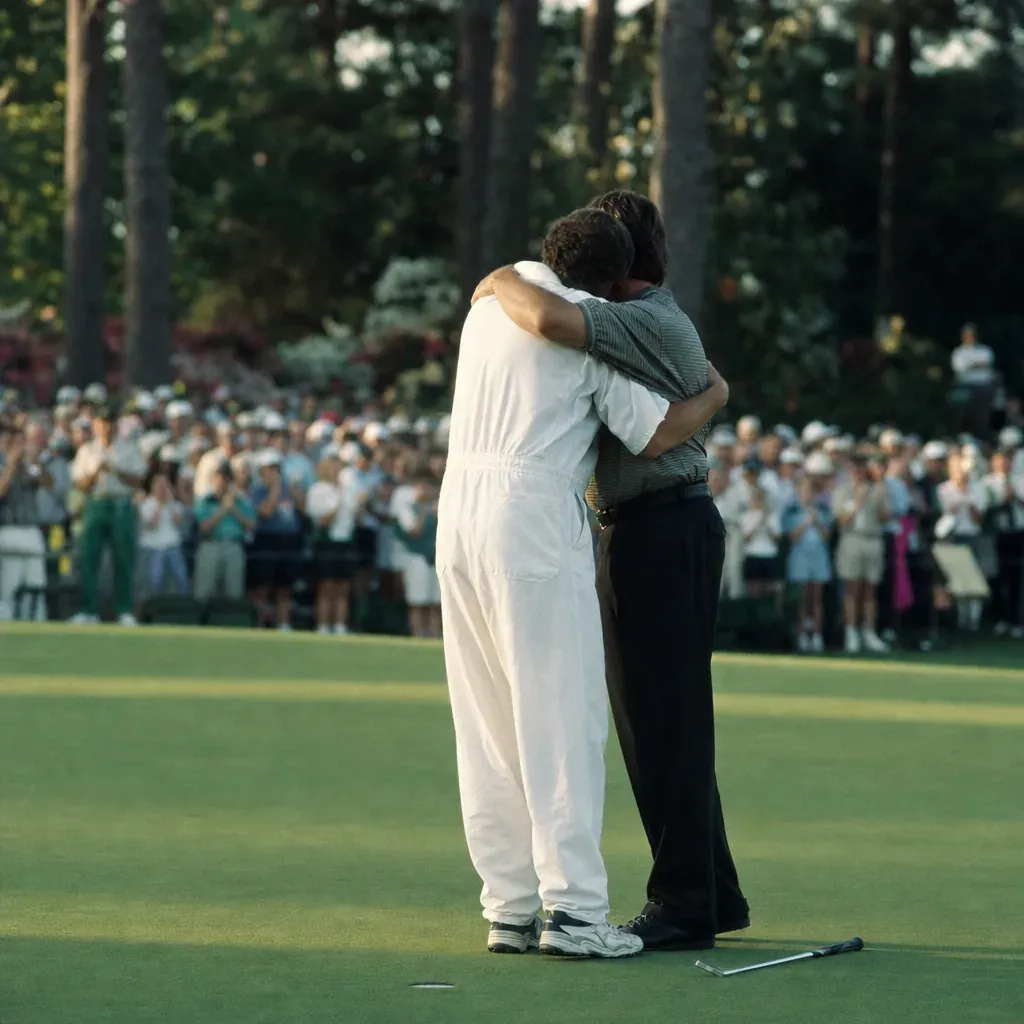
The famous picture from that Masters was all green jacket and champion’s grin. Just beside it was a quieter Georgia story: a man who knew that golf course like a kitchen floor that creaks in all the familiar places. Carl Jackson was an Augusta man, and Augusta National wasn’t some postcard place to him. He had started caddying there as a teenager in 1961, learning its humps, slopes, shadows, and tiny tricks one walk at a time. Year after year, his job was simple and difficult: help his player hear what the course was saying. By 1995, Jackson and Ben Crenshaw had been together at the Masters for nearly two decades. They were first paired there in 1976, and the fit held. Crenshaw was already one of golf’s great putters, the kind of player people watched when the ball reached the green and the whole place seemed to hold its breath. But even a great putter can use trusted local eyes. That was Jackson’s gift. Augusta’s greens can look polite while plotting mischief. A putt that appears to slide one way may have other ideas entirely, as if the grass has a private joke it’s not ready to share. Jackson had spent decades listening to those jokes. So there they were again in 1995, moving through a week heavier than most. Crenshaw’s longtime teacher, Harvey Penick, had died just days before the tournament. For Crenshaw, the Masters was not only a contest. It was grief, memory, pressure, and muscle memory all walking together under the Georgia trees. Jackson stayed beside him. Some friendships don’t need much decoration. They show up in quiet timing: a glance before a putt, a steady presence when the noise grows too large, the right word or no word at all. Jackson was calm and plainspoken, and Crenshaw trusted him enough to lean on what he saw. All week, they worked the course the way they always had. Crenshaw read the greens with the hands and eyes of a master. Jackson added knowledge earned from years of footsteps, from noticing how the ground tilts when it almost doesn’t, from understanding when Augusta is telling the truth and when it is winking. Then came Sunday. Crenshaw reached the 18th green with the tournament in his hands. He finished at 14-under-par and won by one stroke over Davis Love III. The final putt dropped, and for a heartbeat there was the expected picture: the champion, the roar, the green lawn, the whole scene swelling around him. But Crenshaw did not stay in celebration for long. He bent over, overcome. That was the turn, and it was not made of a swing or a putt. It was made of Carl Jackson stepping in. Jackson held him. Only a few seconds passed, but they carried the whole week inside them. The champion and the hometown caddie who had started as a teenager at Augusta National were wrapped together there on the 18th green. No speech was needed. No grand gesture. Just one man knowing, with perfect timing, where to stand when his friend needed catching. Golf is often remembered by numbers. Fourteen under. One stroke. Final putt. Sunday. The Masters is remembered by ceremony, silence, and the color green. But that embrace gave people another way to remember it: not just as a victory, but as a friendship seen clearly for a few tender seconds. Jackson and Crenshaw kept going for decades, through Crenshaw’s final Masters appearance in 2015. By then, they had shared so many walks around Augusta that the course must have felt less like a stage and more like a familiar old room. And for one brief moment in 1995, Carl Jackson made that room feel like home.