Cream of Wheat: The Grand Forks Telegram That Told a Mill to Forget the Flour
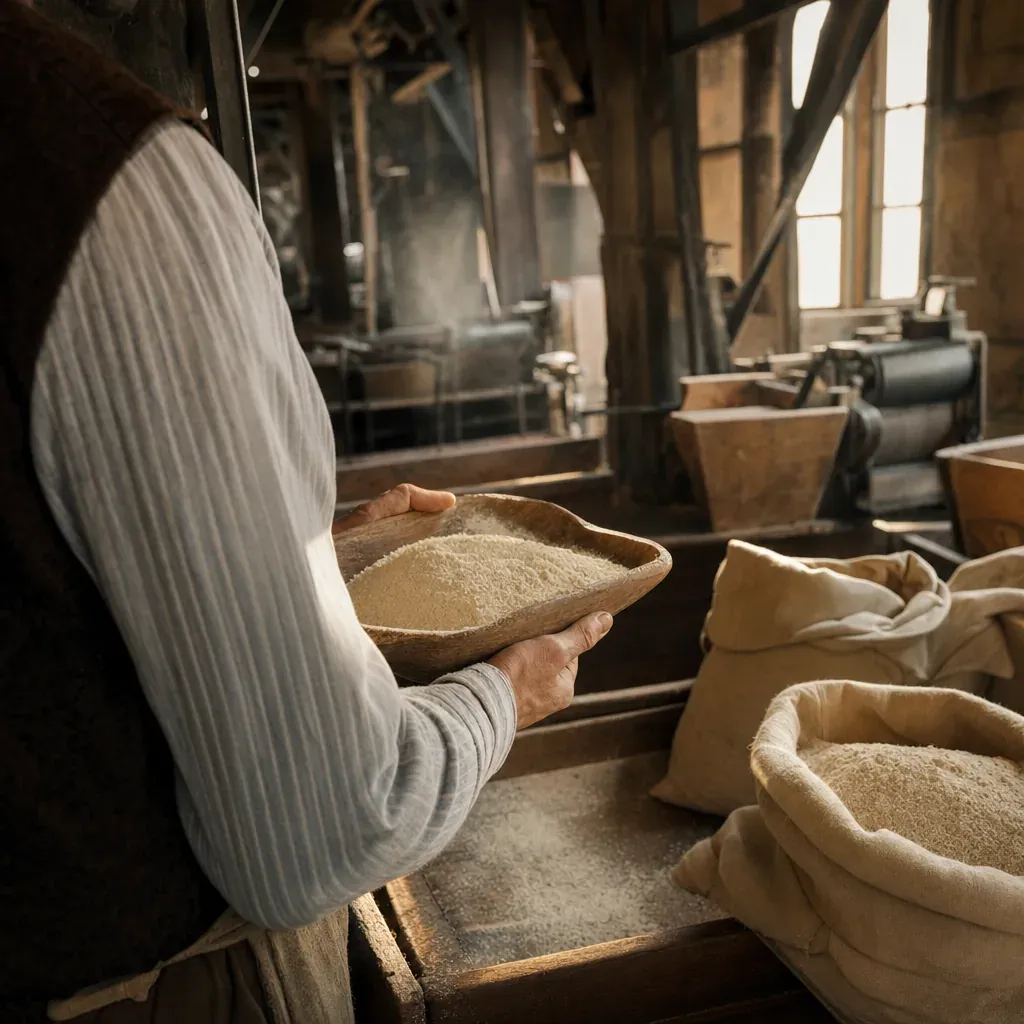
Before it was a familiar box in American cupboards, Cream of Wheat began as a pale, grainy handful of possibility in a worried flour mill. The odd little twist was this: the thing that helped save the day wasn’t the flour at all. Tom Amidon was the head miller at the Diamond Milling Company in Grand Forks, North Dakota. The country was caught in the Panic of 1893, and the mill was struggling, as many businesses were. Amidon wanted to make something useful from the whitest granular part of hard spring wheat, a portion that might otherwise have been treated as a lesser byproduct. It was practical thinking, not glamour. No grand speech. No shining laboratory. Just a miller looking at what was already in front of him and asking whether it could become breakfast. The answer was warm, simple, and spoonable. The company packed the new breakfast farina under a name that said exactly what it was: Cream of Wheat. It had the plainspoken sound of something you could put on a shelf without needing to explain it twice. In a hard year, that mattered. A name didn’t need to wear a top hat if it could help keep the mill going. Then company president George Bull made a small move that changed everything. He sent samples of the new Cream of Wheat east along with a flour shipment. It’s easy to picture the hope tucked into that shipment. The flour was the serious business, the familiar product, the thing mills were supposed to sell. The Cream of Wheat was the newcomer riding along, almost like a polite guest at the edge of the table, waiting to see if anyone would pass it the butter. Then the reply came back. “Forget the flour. Send us a carload of Cream of Wheat.” That line, preserved in company lore and local histories, has the snap of a joke and the force of a rescue. For a North Dakota mill trying to get through a rough season, it was more than a customer’s preference. It was a reprieve with a punch line. Imagine being in that mill when the message was understood. The product they had treated as a practical experiment had just shoved the main act aside. The flour shipment had gone east expecting to be the star, and the breakfast farina had stolen the scene like a small child wandering into a formal photograph and making everyone smile. From there, Cream of Wheat quickly became bigger than its birthplace. The brand soon outgrew Grand Forks, and the Cream of Wheat Company was organized in Minneapolis in 1897. What began as a way to make better use of part of the wheat became a product people actually asked for by the carload. For Amidon, Bull, and the Diamond Milling Company, the change was immediate and practical: they had found something the market wanted at a time when they badly needed good news. For Grand Forks, the story became one of those local treasures that proves a useful idea doesn’t have to arrive with fanfare. Sometimes it comes in a sample shipment, under a plain name, ready for breakfast. And that’s a pretty comforting thing to find in a bowl.

Listen to this story, narrated.