Bob Ross’s Happy Little Trees, and the Alaska Sergeant Who Decided to Stop Yelling
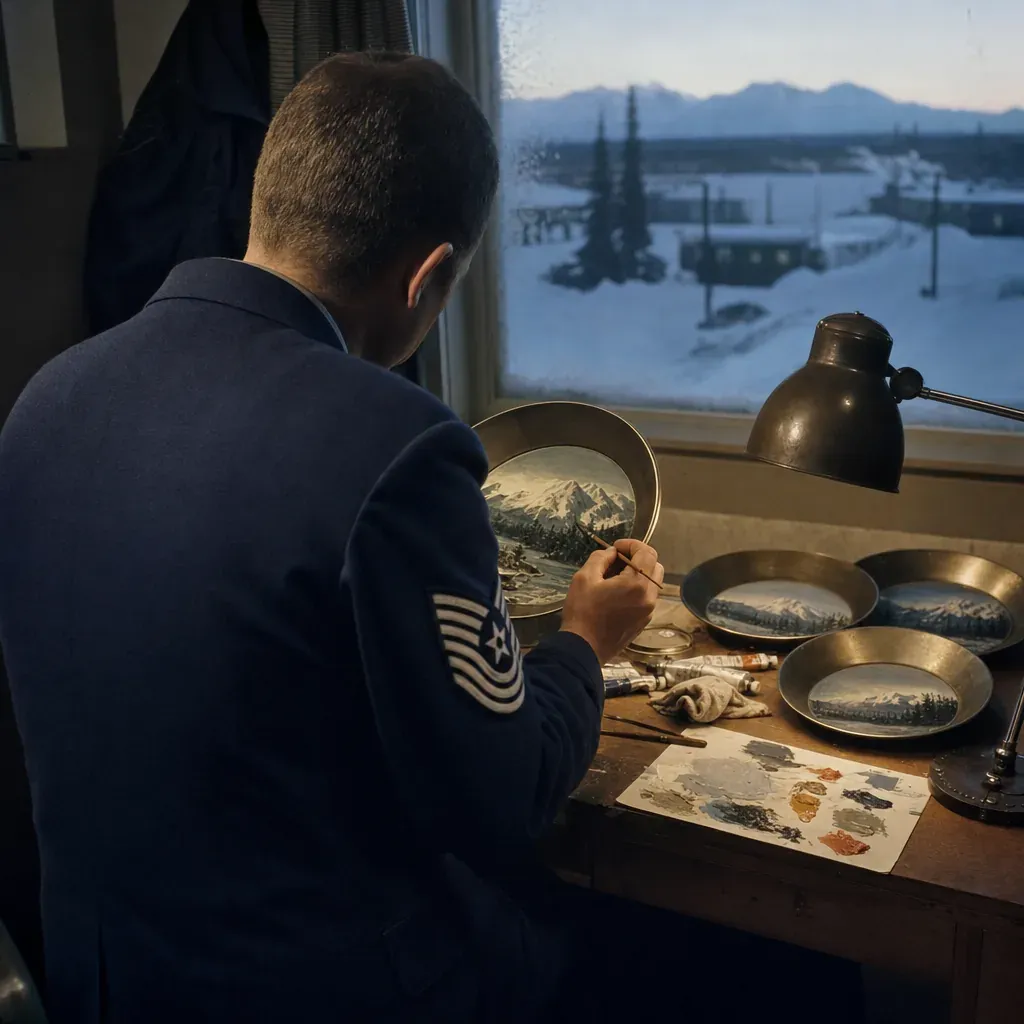
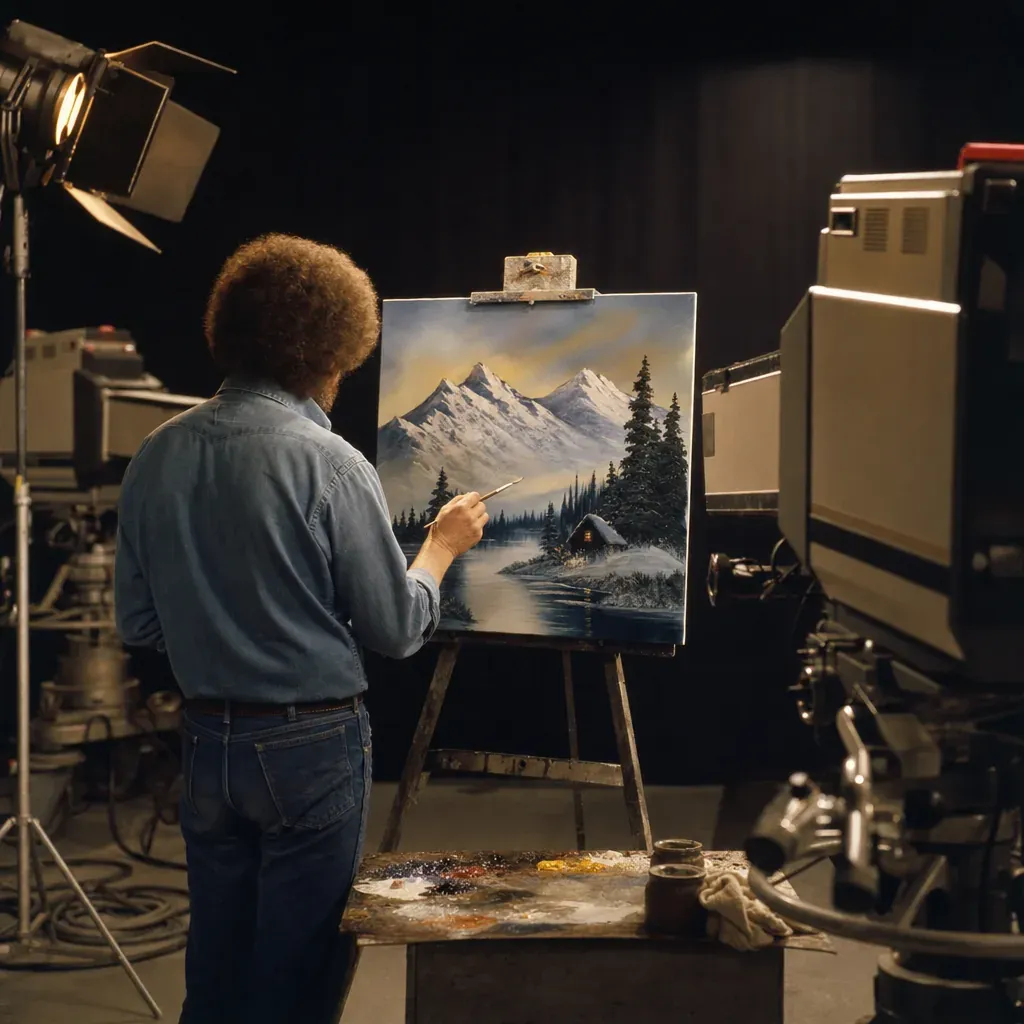
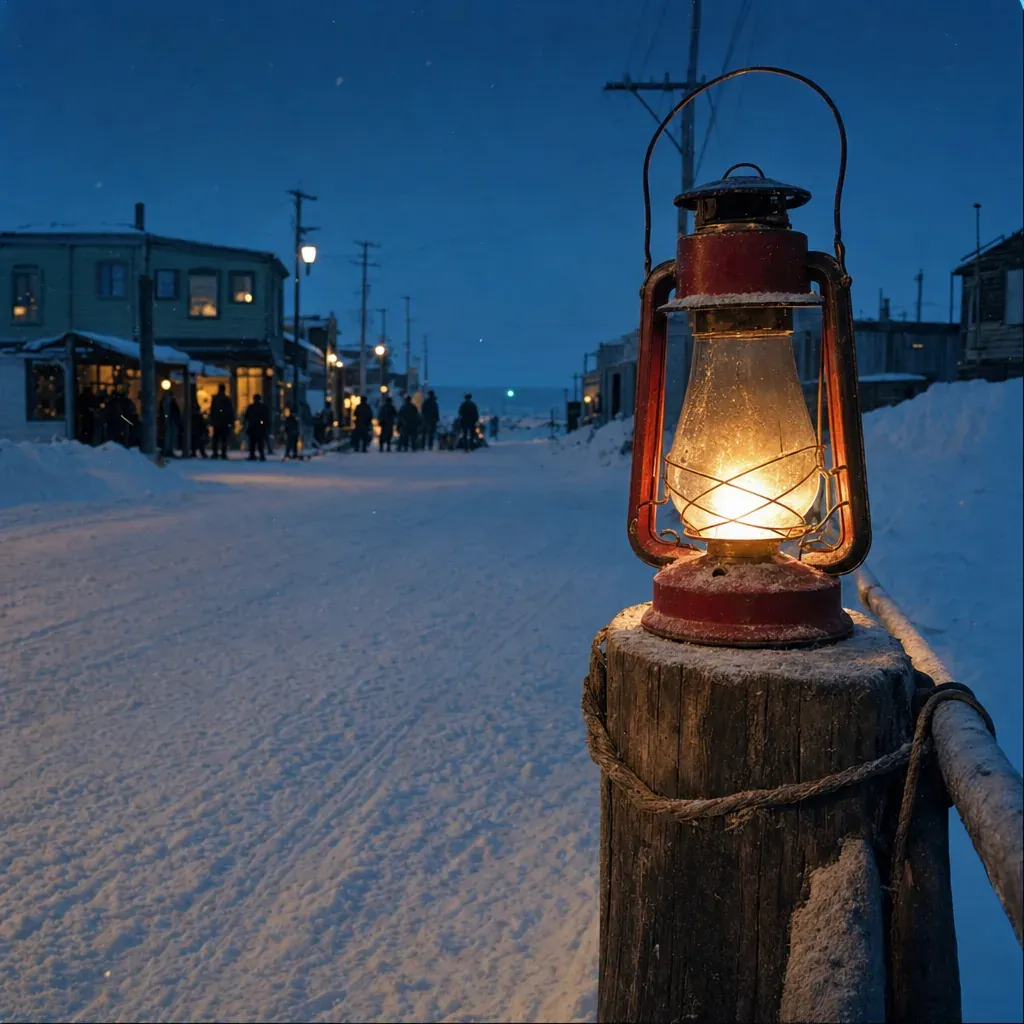
Before Bob Ross tapped a brush against a canvas and whispered about “happy little trees,” he was in Alaska, where snow could swallow sound and the mountains looked big enough to make a person lower his voice. His name then was Master Sgt. Robert Norman Ross, stationed at Eielson Air Force Base near Fairbanks. He enlisted in the U.S. Air Force in 1961 and spent 20 years in uniform, eventually becoming first sergeant of the Air Force clinic at Eielson. It’s funny to picture now. The man millions would later know as the calmest person on television once had a job that required him to be anything but. Ross later joked that he was “the guy who makes you scrub the latrine” and “the guy who screams at you for being late to work.” Not exactly the voice you expect to hear saying, “Let’s give this little tree a friend.” But Alaska was working on him. Beyond the base were vast skies, snowy peaks, cabin lights glowing against the dark, and long stretches of wilderness that seemed made for paint. Those northern scenes became his first serious subject matter: snow, mountains, big skies, quiet places. During his Air Force years, Ross took painting lessons and learned fast oil-painting techniques. He didn’t just practice in private. He painted small Alaska landscapes on novelty gold-mining pans and sold them. There is something wonderfully Bob Ross about that image: a military first sergeant, surrounded by order and inspection, quietly turning gold pans into little windows of snow and light. You can almost see them propped somewhere, tiny mountains resting where someone expected a souvenir. Still, his day job was his day job. He inspected beds. He barked orders. He was the stern voice in the room, the one making sure people were on time and things were done properly. Somewhere inside that life, Ross made himself a promise. He said that if he ever got away from that kind of work, he would never be that kind of person again. That is the hinge. Not a dramatic escape. Not a grand speech. Just a man noticing what a hard voice did to him and deciding that, if he ever had the chance, he would choose a softer one. After retiring from the Air Force in 1981, Ross studied with painter Bill Alexander. In 1983, he began “The Joy of Painting,” the PBS series that would run for 31 seasons and 403 episodes. And there he was: the former first sergeant, now standing before a blank canvas, speaking as if he didn’t want to startle the paint. He told viewers there were no mistakes, only happy accidents. He painted mountains that looked as if they had carried a little Alaska onto the screen. He added cabin lights, soft snow, and skies with room to breathe. He gave trees friends. He made clouds look comfortable. Ross did not forget where he came from. He carried it differently. The years near Fairbanks gave him landscapes. The years in uniform showed him the kind of man he did not want to remain. So when the camera came on, he kept his promise in the gentlest way he knew how: one quiet brushstroke, one kind word, one “there” at a time. The old sergeant found his softer voice, and millions of people leaned in to hear it.