Walmart: The part where Sam Walton put on a grass skirt because his associates earned it
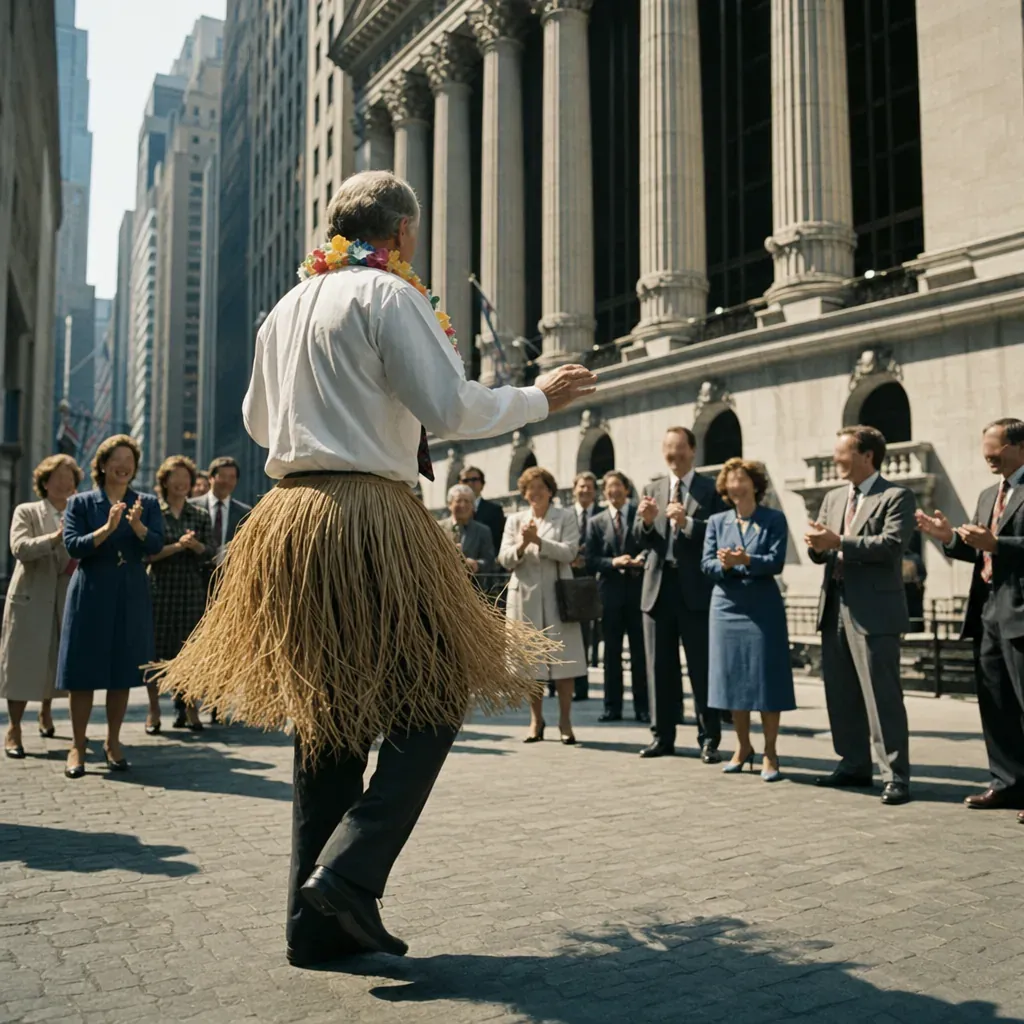
A grass skirt on Wall Street is not what people expected from a famously frugal Arkansas businessman. Add a lei, a public hula, and a promise kept, and the financial district had itself a very unusual company celebration. Sam Walton was still, at heart, a merchant from Arkansas. He had opened the first Walmart in Rogers in 1962, and by the early 1980s the company was growing quickly from its Bentonville base. But Walton held onto the habits that felt personal: Saturday-morning meetings, store visits, and calling employees “associates,” a word that made the work sound shared. He also liked a plainspoken goal. Walton made his associates a bargain that sounded more like something cooked up over coffee than handed down from a boardroom. If they helped Walmart reach an 8 percent pretax profit goal, he said, he would dance the hula on Wall Street. It was ridiculous. That was part of the charm. There was no polished slogan, no committee-approved campaign. Just a number, a challenge, and a founder willing to put himself on the hook in the silliest way he could think of. If the team came through, he would put on the grass skirt. And the team came through. So in 1984, Sam Walton went to Wall Street and paid up. He wore the grass skirt. He wore the lei. And there, in public, the founder of Walmart did the hula. No one needed to pretend he had missed his calling as a dancer. That wasn’t the point. The funny part was the point. The sight of the boss making good on a goofy promise was the celebration. Walton could have marked the company’s success quietly. He could have gathered executives for a private toast, nodded over the numbers, and moved on to the next target. Instead, he chose the version that belonged to the associates who had heard the promise in the first place. A company built through checkout lines, stockrooms, shelves, small towns, and early mornings reached a number, and the reward was not a speech from a distant leader. It was Sam Walton in a grass skirt, letting everyone know the bet had been real. For the associates, the moment stuck because it was funny, simple, and easy to retell. “He said he’d do it,” the story seemed to say, “and then he actually did.” You can almost hear the laughter traveling back from Wall Street to Bentonville, then out to the stores, where people who had helped reach the goal could enjoy the picture of their famously thrifty founder looking just a little bit ridiculous on their behalf. That was the ripple. The promise turned a profit goal into a shared joke, and the joke turned into a memory. It gave the people who worked in the stores a piece of the celebration, not because the dance was grand, but because it was theirs. Sometimes the sweetest applause is for the person brave enough to wear the grass skirt.
Listen to this story, narrated.